
How do I write emails that truly produce outcomes?
Every client I work with has their own set of problems, but they all have one thing in common.
Can you guess what it is
Regardless of their industry, size, or even position within the company, everyone uses email and wants to know how they write emails that customers open.
Despite the advent of social media, forums, and mobile chat apps, email remains one of the most popular forms of communication in the world.
According to a study by Radicati, there are over 3.7 billion email users worldwide, and that number is growing steadily.

If you think the stats are high, sit down before I tell you the volume of emails sent.
We send and receive 269 billion emails every day. It seems impossible to hold your own in this crowd.
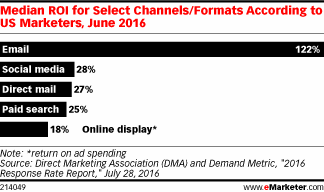
However, email remains one of the most effective marketing channels, with a median ROI almost five times that of other channels like social media, direct mail, and paid search.
Adobe even found that half of consumers prefer to be contacted by brands via email through social media and direct mail.
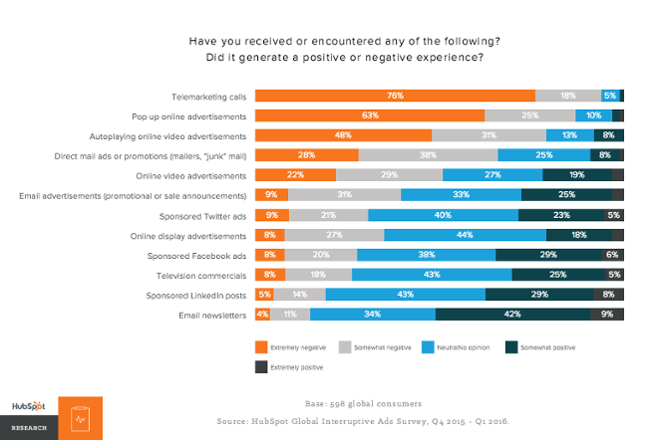
In a recent survey, email newsletters had the highest positive consumer experiences.
Knowing about email is of course effective, and writing an effective email doesn't have to go hand in hand.
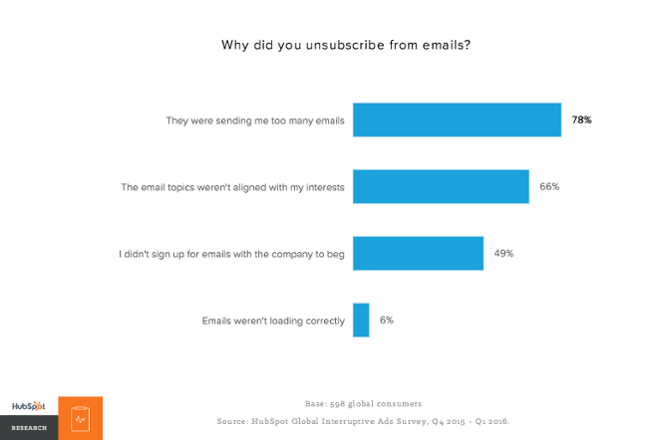
If you send the wrong emails, you will lose customers. In fact, 66% of people opt out of email because it doesn't align with their interests.
You need great email to keep your customers happy.
That is the problem that I am going to alleviate for you today.
You know all of the reasons why you should be using email, but we're going to dive into the details of how those emails are actually written.
The first step is to segment our email lists so that we can target our emails to the right audiences.
How do I write emails with Proper Audience segmentation
We know email is effective, but we don't have time to personally email every single customer on our lists. However, every email has to feel personal.
When your customers are properly segmented, it's easier to send emails that feel more personal.
The messages are based on the interactions your target customers have with your company and website. As a result, they don't feel generic, sporadic, or irrelevant.
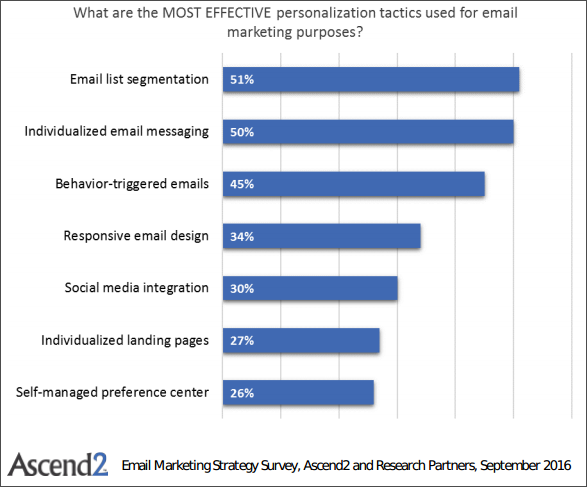
A recent survey by Ascend2 found that 51% of marketers consider email list segmentation to be the most effective personalization tactic.
Has a customer recently made a purchase from you?
A thank you email explaining the benefits of buying can help you keep your brand in mind with the customer.
A prospect may have left their shopping cart before taking the next step and buying a product. Send a discount code to lure that person back.
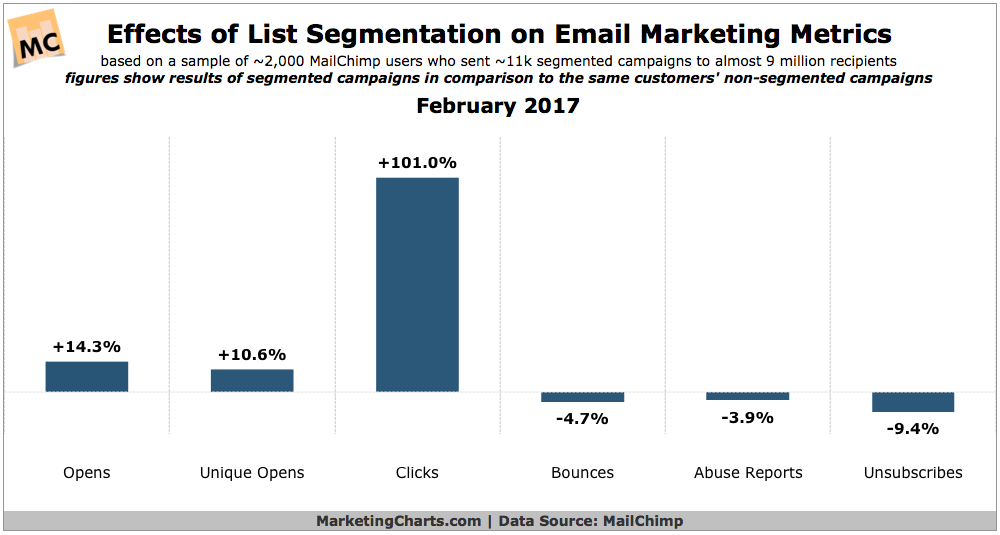
MailChimp recently compared 11,000 segmented campaigns with unsegmented campaigns from the same customers. The segmented campaigns were found to outperform their non-segmented counterparts on each metric.
How can you segment your customer lists?
Basic demographics like age, gender, and location are a good place to start. They're not always enough, but they'll help you get started.
You will likely speak differently to a retired veteran than you would to a teenager or college graduate. Additionally, men and women may react differently to the language they use in email marketing.
Of course, this type of personal information may not be available. It's also not the most effective way to segment audiences.
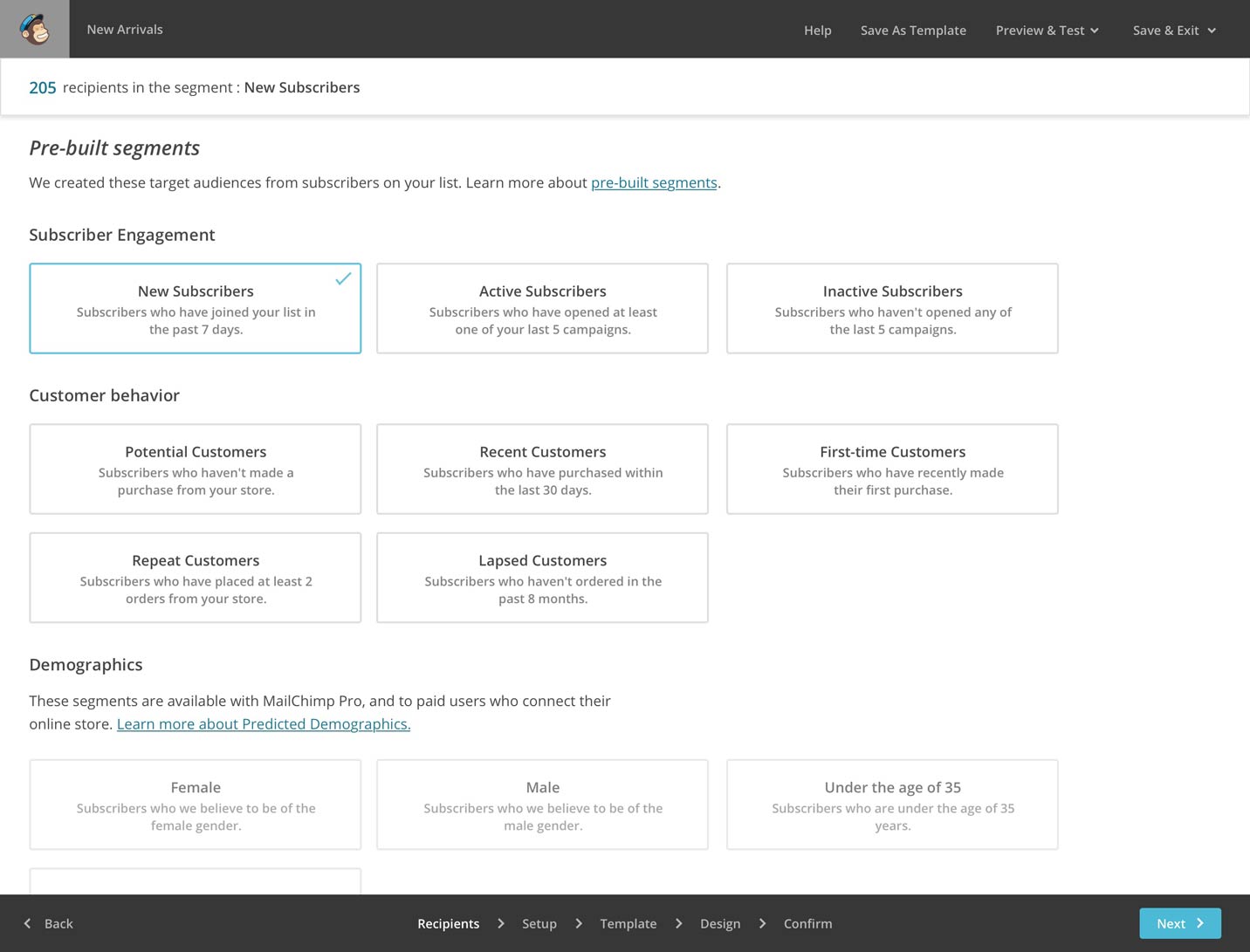
The MailChimp marketing automation platform has a variety of popular audience segmentation options based on engagement, behavior, and other criteria you may find useful.
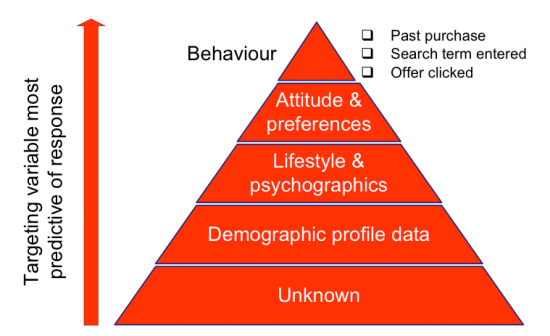
These behavioral triggers are much more likely to predict a customer's reaction anyway. Recommended purchases work regardless of age, gender, or location, for example.
Behaviors like buying, canceling, subscribing, and leaving the shopping cart can easily be resolved with personalized emails.
Ideally, you're sending the right message to the right consumer at the right time. It sounds impossible, but modern marketing technology not only makes it accessible, but also automated.
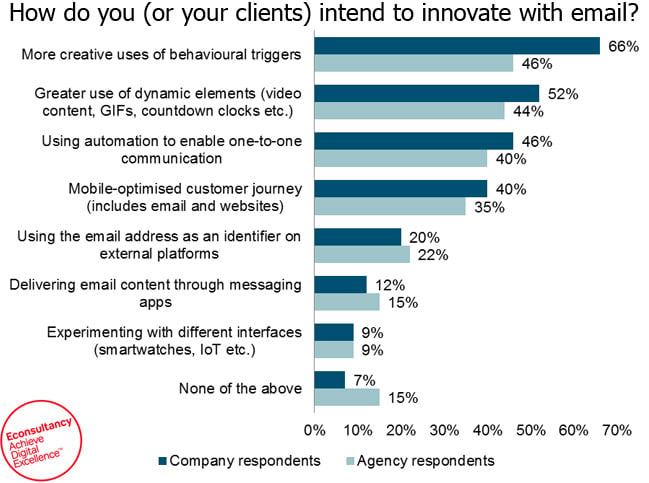
Behavioral triggers are one of the most effective ways to innovate markers. Marketers can analyze behavioral triggers in their audience to find strategies that really work.
If you can set up an email marketing strategy that actually gets consumers to open your emails, you can get much higher conversion rates.
As mentioned above, behavior segmentation also makes it easy to automate email.
Marketing automation is an important part of the sales cycle and you are essentially leaving money on the table by not using it.
Do not miss this opportunity!
Charity: Water for example has a great email automation campaign that tracks the progress of your donation to the organization.
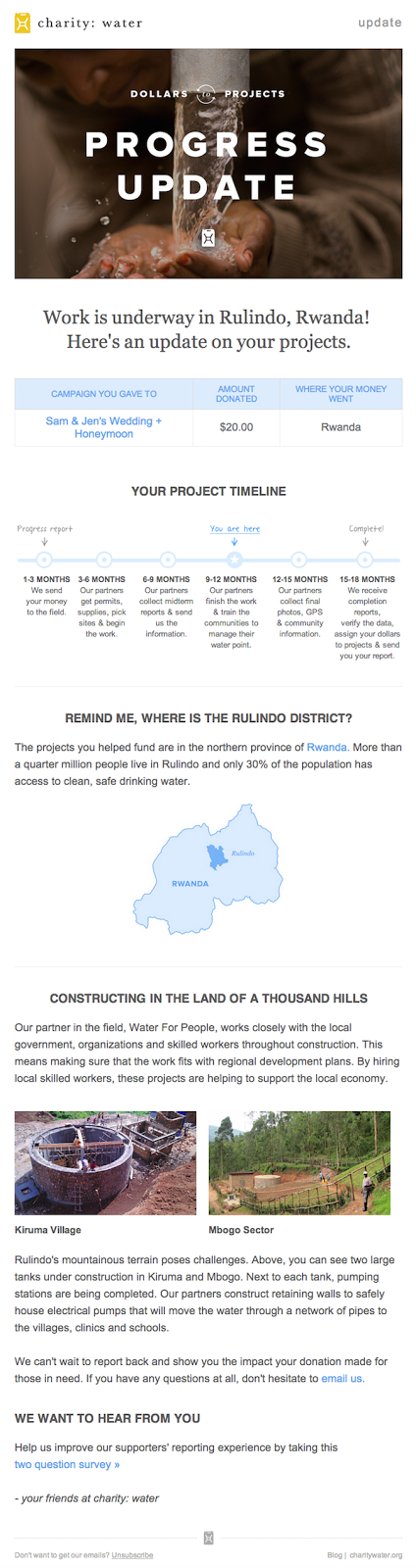
When we donate money, we seldom see the money being spent. In fact, this is one of the main obstacles nonprofits face when trying to raise funds.
Automated emails with useful data offer personalized transparency for the process. Consumers feel they understand their role in the equation.
Now we've broken our customer lists into the right groups and it's time to create the right emails for each group.
To do this, we have to decide what our goal is for each segment and work backwards from there.
How to write emails building backwards from the destination
It's important to have a goal for your email campaign. Otherwise, you're just firing emails and hoping to resonate with your audience.
Not a good strategy.
There are only four basic types of email you can write:
- narrative: Tell an exciting story.
- Descriptive: Illustrate your product or service with words.
- Expository: Teach your audience how to do something.
- Convincing: Convince readers to take action.
Each guy has a different tone and a different goal.
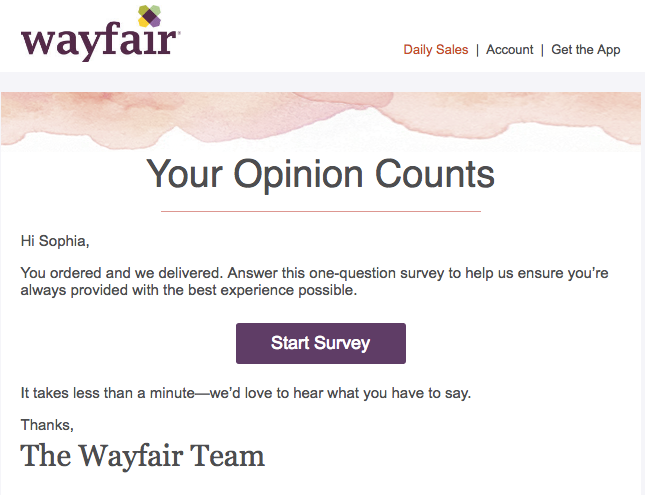
For example, let's say your goal is to convince customers to conduct a post-purchase survey about their experience.
There needs to be a clear CTA, preferably a graphic that entices users to click. This should be the focus of a short email briefly explaining the benefits of taking the survey.
Here is an example of a compelling email from Wayfair.
On the other hand, an expository email contains all the facts a customer needs to understand a topic.
These are usually newsletters, but not always.
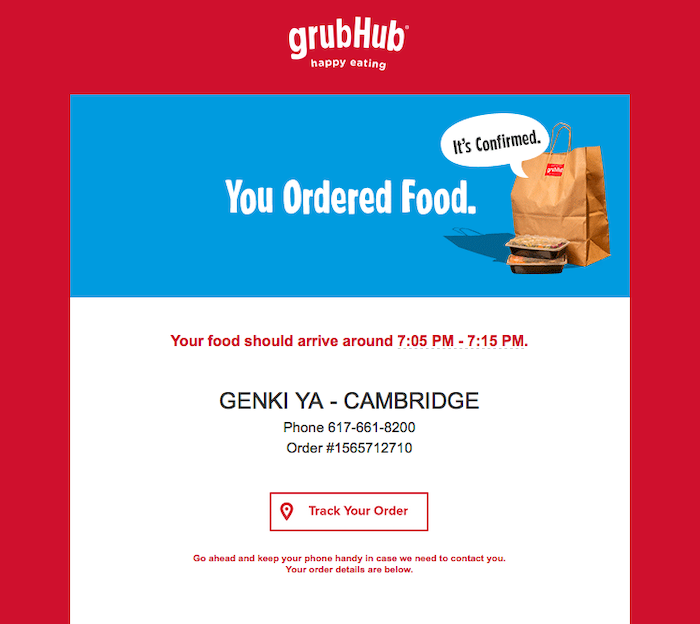
With this GrubHub e-mail, the goal is an order confirmation in which all relevant information about your order is displayed.
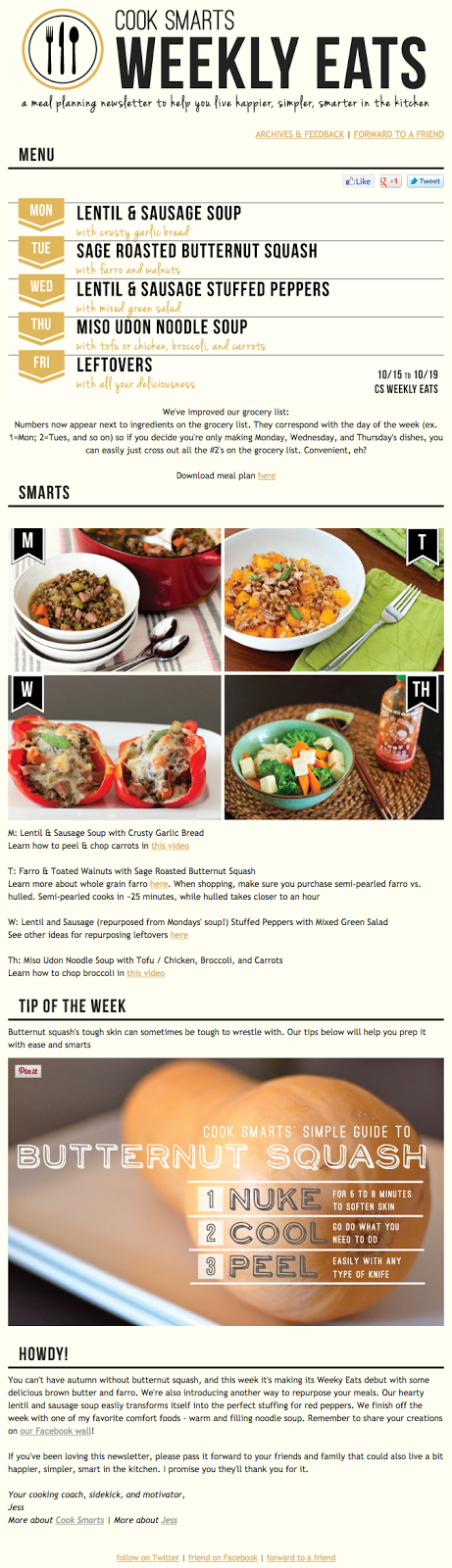
Descriptive emails are usually announcements for new products. They allow you to generate buzz (and hopefully some sales). Here is a descriptive menu from Cook Smarts.
Descriptive emails also give you the opportunity to show your passion for your products. Here is a descriptive menu from Cook Smarts.
And finally, we have the narrative email that you can use to tell your brand story. Here Poncho transforms an ordinary weather report into a narrative infographic.
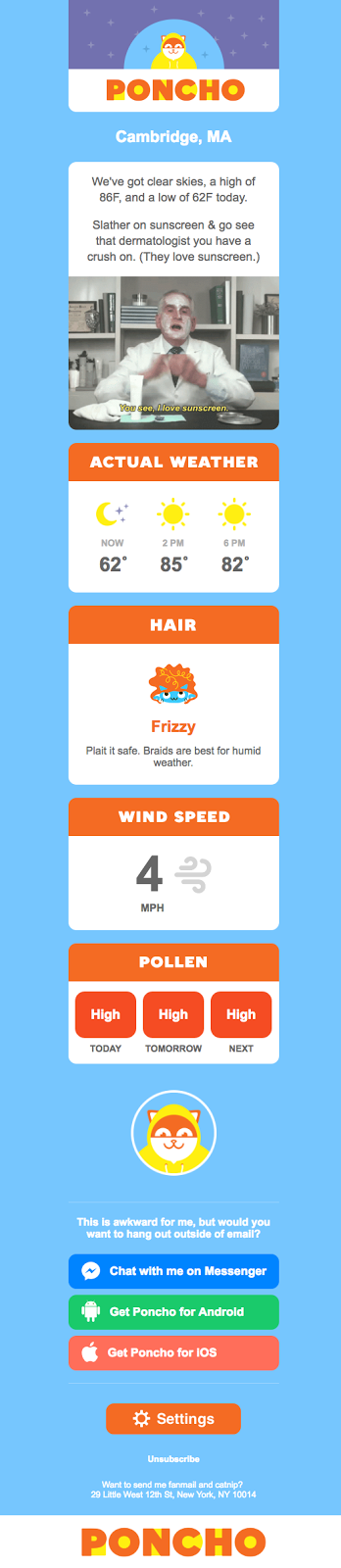
At the moment we're going to try an exercise. Think of all the different types of emails you can send your customers based on their behavior and other events.
New product releases, leadership changes, sales and promotions, thank you emails for customer orders, emails letting customers know they are sorry to leave, replies to abandoned shopping carts and holiday celebrations come to mind immediately.
The next step is to determine the goal for each of these behaviors. What should the customer do?
Usually you want one click on your website. You can also use a CTA to request a purchase or provide relevant content.
By creating these templates in advance, customers will feel personally connected to your business while saving you time and resources.
5 steps to writing the perfect email
Now you know why you should email your customers. They are also familiar with the different types of email you might send.
What we need to do is pin down a reproducible process for writing.
Of course, you have to start with a list of subscribers. Collect email addresses from your fans and followers so you can communicate with as many people as possible.
Once you have a list, you can start writing emails responding to the behavior triggers I talked about above.
Here you start.
1. How do I write an email subject line?s
You only have one chance to make a first impression, and the subject line is that chance for emails.
The subject line determines whether or not your email will ever be read. A recent survey found that 33% of email recipients open an email based on the subject line only.
This is the first impression you need to make if you want your copy to be read.
Constant Contact's email marketing specialists have seen thousands of effective emails. The company offers some subject line tips (along with great examples of success formulas).
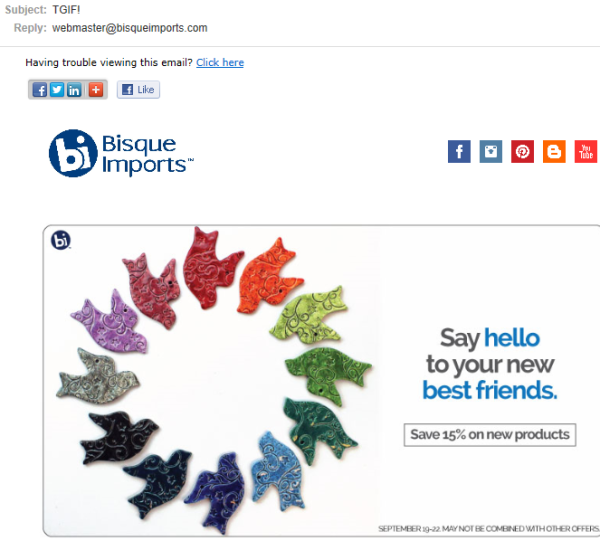
It's important to keep the topic short and snappy. Many email programs cut off long subject lines so that your subscribers don't see everything. Above is an example with just a simple acronym of Bisque Imports.
Everyone knows what TGIF means, so it works. However, you can use other types of languages to have your e-mail read.
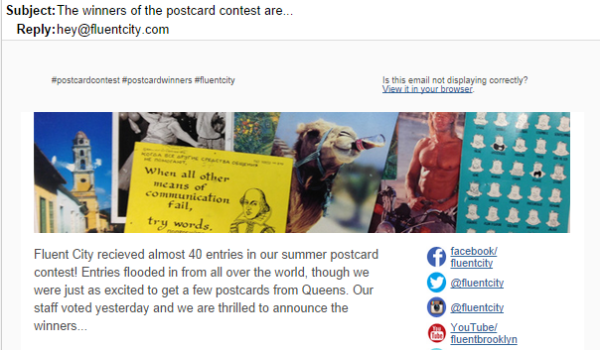
A teaser or announcement can be a great way to get people click through and read. People love a puzzle or opportunity, so if the subject line piques their interest, they're more likely to check the body of the email.
Check out this example from FluentCity announcing the winners of a recent competition.
Whatever you do, avoid spammy language like "buy now".
You don't have to be overly promotional. Focus on being informative and fun.
Entertaining and / or funny subject lines are a great way to increase the chances of opening an email.
Check out this gem of a subject line from The Basketry.
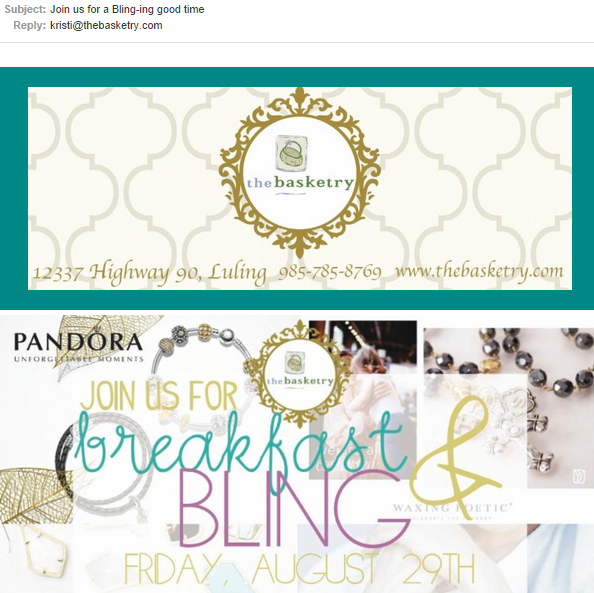
Nice pun, right?
Once you have found the correct subject, you can move on to the content of the email body.
2. Keep emails short and friendly for customers.
The worst mistake you can make with an email is to put too much information into one email. The document is too long.
Sure, people need to know relevant information, but you can spread the information across multiple emails.
Alternatively, you can link on pages on your website so the reader can search for more details if they so wish.
In any case, don't waste your subscribers' time. This is the fastest way to "unsubscribe".
All you need is a simple teaser with a link to your website.
Check out this simple example from Postmates inviting customers to click through for a limited-time offer of slats on demand.
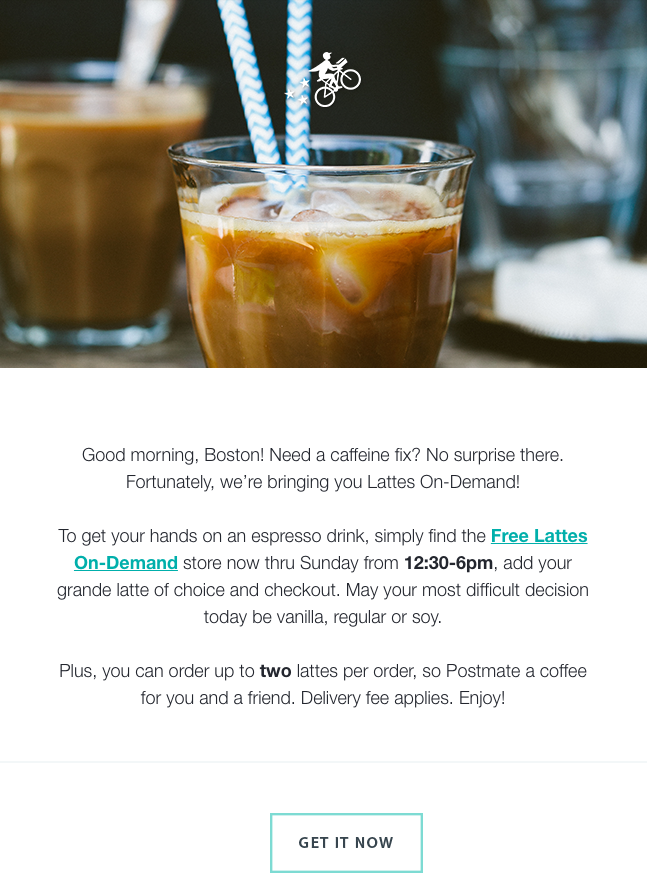
The company wastes no time getting to the point. There's a quick three-word greeting, and then the company immediately jumps to the point of the offer.
After receiving a description of the offer, we immediately receive a CTA button that you can click through and take advantage of the offer.
Every email should be treated with this short, sweet, and to the point approach. We only spend 15-20 seconds reading an email, so it shouldn't look like a novel.
However, there is a lot of information that can fit in such a small space. So how do we decide what to cut and what to keep?
Let's examine that.
3. Write better emails by adding relevant information and calls to action.
Journalists need to find out who, what, when, where, why and how a story is before publication. This is a standard that we will set for our email.
Every email we send has to answer these important questions.
Suppose we have a weekend sale ahead of us.
Selling is what, our store location is where, our business is who, vacation is when, special prices are the reason, and showing up is how it's done.
Without this information, your recipients will be lost.
Having a CTA or buying it now is also important. How else can your customers take action?
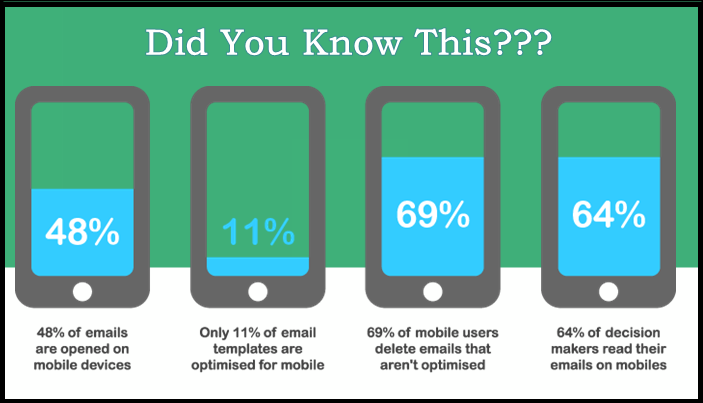
These buttons are great ways to entice clicks. Before using these advanced techniques, however, make sure your customers can view them on mobile devices.
Almost half of all emails are checked on mobile devices.
It's a shame to spend time composing a short, compelling email only to see limited engagement due to mobile device incompatibility.
Don't become that marketer.
Now we have to make sure that every customer feels individually connected to your company.
4. Personalize each email and use the second person perspective.
Nobody wants to feel like they are just another faceless number.
It is important to greet each individual in their own personal language, which is easy to do with email template programs.
You also need to write emails in the second person. Focusing on “you” opens a conversation that makes the recipient feel important.
Check out this email from The Skimm that the second person makes great use of in a personalized email
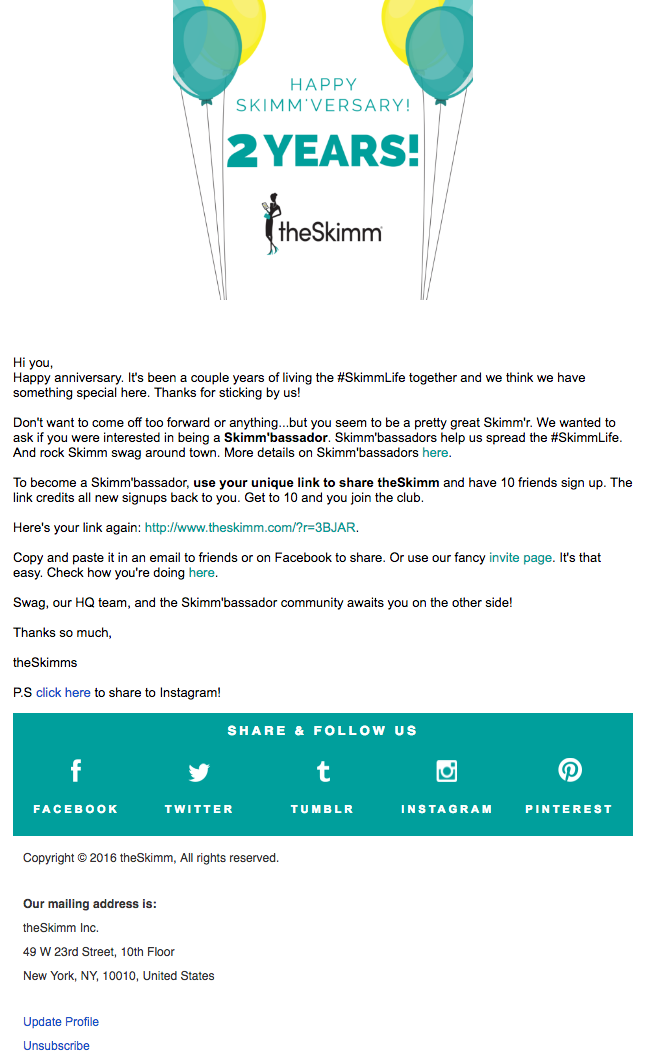
This email makes it clear that the recipient is the focus of attention. We all like to feel special, and that's how it's done.
After we have the email together, there is only one last thing to do.
5. Proofread and double-check your grammar several times.
There's no feeling worse than spending hours devising the perfect email template, sending it to your contact list, and finding an obvious typo.
Typos are the worst and can be a sign of spam in email. It looks unprofessional and can even result in spam filters blocking your email.
Take the time to do at least two rounds of editing to check for these typos and make sure everything is polished before emailing your clients.
Now that everything is grammatically correct, we can finally send our email and take advantage of the benefits.
Conclusion
E-mail is one of the most widely used forms of communication in the modern world. More people use email than social media, chat programs and forums.
In other words, it's the perfect opportunity to connect with your audience. But only if you follow best practices and get creative.
Sending email newsletters and emails based on triggered actions can increase conversions, build trust, and lead to a healthy ROI.
Creating targeted email templates based on behavior is perhaps the most important change you can make to your digital marketing endeavors.
Have you found success with email?