
Find out how to Create an Editorial Model Information
As a digital marketer, you know how important the tone and message of your blog is to the overall success of your business. Having a coherent approach to your digital content, especially the content on your blog, is vital to your brand.
The best way to ensure that your website is editorially cohesive is with an editorial style guide.
This article takes you through the basics of an editorial style guide. You will learn the steps you need to take to create your own style guide, be it from scratch, using a template, or with the help of a freelancer.
What is an Editorial Style Guide?
An editorial style guide is a set of guidelines for the writers and editors on your team. These guidelines provide standards for grammar, spelling, sentence structure, and image usage.
The goal of a style guide is to ensure that your content remains consistent and of high quality, regardless of who is writing or editing the article.
Why does your website need an editorial style guide?
An editorial style guide is more than just a preferred list of grammar rules. It provides guidelines for your content team for creating useful branded content. An editorial style guide ensures a standard basis for quality and consistency. This becomes more critical as your in-house editorial team grows.
Perhaps you think your website is too small, or you can always create your content now and work out the details later. The truth is, the sooner you can nail your editorial style and processes, the less work you and your team will have to do.
Without clear guidelines, your inbox will soon be flooded with questions from your writers and editors. Your editors may be of the opinion that they are free to decide on the content due to a lack of guidelines. This can lead to inconsistent, and possibly even poor quality, work that has your brand name on it.
Elements of a style guide
There are certain elements that all style guides should include, such as:
grammar
Do you expect your writers to use the Oxford comma? Are there any instances where you prefer the semicolon to the em dash? These are the grammatical rules to keep in mind in your style guide.
Other grammatical elements to take a stand on include where the punctuation falls in relation to quotation marks (inside or outside), prepositions at the end of a sentence, and the beginning of sentences with conjunctions.
spelling, orthography
Subscribing to services like Grammar fixes most spelling mistakes. There may be times when a word can be spelled correctly in two or more ways. So which one should your writers choose?
The most common spelling differences are differences between American and British English. Examples include:
- Center to center
- Theater against theater
- Color against color
- Criticize versus criticize
- Program against program
You should consider where the majority of your audience live when deciding on a style of spelling. The most important thing, however, is to choose a style and be consistent.
Voice and tone
The voice is the overall expression of your brand, while the tone is the delivery of that message. The tone will vary by medium (e.g., social media post, blog post, newsletter, press release), but the overall brand voice will be the guiding light of your writers.
Is your brand voice considerate and simple like Uber or functional and expressive like Starbucks? Once you've found the sweet spot of your brand voice, it's time to determine what your tone is and when it may change depending on the medium or circumstances. Perhaps your tone is casual and chatty on blog posts, but funny on social media posts.
You want to include relevant examples here, as Uber does in the Applications section of the Style Guide. These will help hold your posture and give your writers a handy guide to refer to in case they need it.
Sentence and paragraph length
From funny one-liners to groupings of five to six sentences, there are many valid ways to create a paragraph. This is where you want to outline your general preferences and when exceptions should be made.
For example, longer sentences and paragraphs are the norm on academic websites. This is because a lot of high-level information must be provided at the same time. However, on recipe or hobby blogs, shorter sentences and paragraphs can help bring a point home.
Left
This section of your style guide should explain how links should be formatted on your blog, but also how often links should be used and where to (e.g. external or internal content).
For example, if you are a medical or academic marketer, links to external sources may need to meet a minimum standard of quality. In this case, you should provide explicit examples of websites and sources that you trust.
resources
Your editorial style guide should be detailed, but if it's too long it can be difficult for your writers and editors to use effectively. One way to reduce the length of your style guide without sacrificing its content is with resources.
The resources section of your style guide should have links to guides that you have properly reviewed. These can be:
- Academic style guides (e.g. APA or MLA)
- Grammatical rules and guidelines
- Guides and documentation for platforms your writers and editors use
- Database links
You want to set up your writers to be self-sufficient. Having a large resource area in your editorial style guide is a good place to start.
Images and other media in an editorial style guide
When promoting the use of images and other media in your website content, be sure to explicitly state the formatting, mapping, content, and more. What do these elements cover?
- Formatting: Include minimum and maximum dimensions, image size requirements, and placement within an item
- Attribution: Outline your expectations for how your writers should associate content with the creator. This depends on the copyright license, but compliance with copyright laws is a must.
- Content: You should point out any restrictions or restrictions you have for certain activities within images, such as: B. Drink alcohol. Or maybe you have a style preference for feature images, e.g. B. Overlay recordings. This information will be useful to your authors and editors.
Mismatched images have very real potential consequences. Hence, this part of your style guide should be very specific. It is best to provide your authors and editors with examples and even templates.
Create your editorial style guide
Now you can create your own style guide. Where should you start
Before you get overwhelmed with the process, let's discuss three ways you can create your own style guide.
Hire a freelancer to create your editorial style guide
You can hire a freelancer for just about any blog or website-related task. So why not hire a freelancer to create your style guide? There are freelancers with experience writing industry-specific content, including style guides. If you can find a freelancer with experience creating a style guide in your field, then even better!
There are several different freelance recruiting platforms such as Freelancer and Upwork. You can also reach out to your personal and professional network for recommendations.
An experienced freelancer can walk you through the process of creating an editorial style guide. However, you should come to the table with some prepared information. For example:
- Brand voice and tone (casual? Authoritative? Academic?)
- Your preference for tension and perspective
- Any strong preferences you have (e.g. Oxford comma, text formatting, picture formatting)
- Industry or company requirements
You hired the freelancer for his knowledge and experience. So don't forget to use it. If your freelancer in your niche has created an editorial style guide, ask them for recommendations based on their previous work.
You might be surprised which sections you haven't even added and which ones you can cut. Using this prior experience can improve the quality of your style guide and avoid problems caused by ambiguity.
Creation of an editorial style guide from a template
If a freelancer isn't on your budget, you don't have to go it alone. There are many style guide templates that you can work with.
The best place to look for templates like this is in marketing, branding, and design blogs.
TechWhirl offers a Word document template for download, and Lucidpress has its own template that you can customize using the online editor. You may also be lucky with template repositories like this one from Microsoft.
It is important that a template is a guide, not a rule book. You don't have to include all of the sections, and you can add any sections you think necessary.
Creating your own editorial style guide
If you prefer to create your own style guide from scratch, consider the step-by-step process outlined below.
Start with a solid foundation
At this stage it is time to choose an established style guide as a basis.
There are many options as detailed below including APA and MLA. By choosing one of these guides as a base, you can easily create the basis for your style guide.
These established manuals already contain rules on grammar, structure and formatting. You can then build on these rules to create a robust editorial style guide for your website.
Set up Brand Voice and set the tone
Two critical elements of marketing content are often overlooked: brand voice and tone. The reason these are so often overlooked is not that they are unimportant, but that they are difficult to distinguish.
The voice is your brand's personality. This will remain the same throughout the life of your brand.
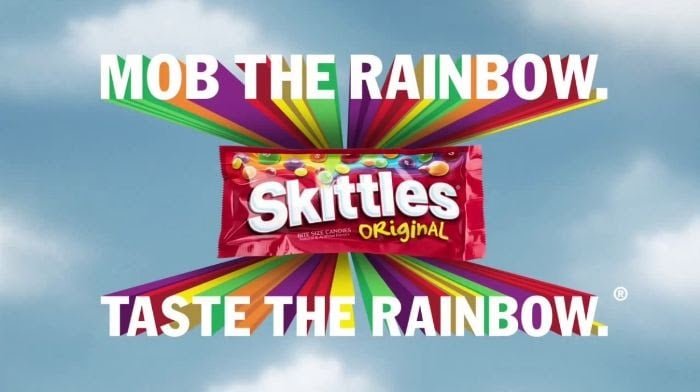
Skittles, for example, has a playful and optimistic voice. Your marketing campaigns are somewhat awesome, with bright colors, loud noises, and catchy sayings in mind.
The tone is the inflection of your brand voice that changes depending on the situation. Even if you have an army of writers, you can make sure your blog holds together by giving your writers and editors a tone to stick to.
Remember the big three: time, voice and point of view
Now that you know the tone of your content, it's time to outline the "how-to". How do your writers want to speak to your audience? The answer depends on the tense, voice, and point of view you prefer.
The writing refers to the three tenses: past, present and future.
There may be reasons why all three times are used on your website or blog. You should still choose a dominant time that your writers can rely on in most cases.
Voice refers to active voice versus passive voice. This means that the subject comes first (active) or the object comes first (passive). Active voice is the standard for most bloggers and marketers. It offers a more chatty tone that readers will find persuasive.
position refers to the writer's perspective: first, second, or third person.
Bloggers and marketers typically use first-person ("I") or second-person ("you") statements. The point of view you choose will largely depend on your content niche and your general tone.
It's best to have a standard recommendation for all three of the above. You can add exceptions to the rule, but if so, give specific examples.
Set up default formatting
The way your content flows depends largely on the formatting. Some basic formatting guidelines to consider are headings and subheadings, bold and italic text, and hyperlinked text.
You may want to consider your content management system and possible restrictions on the guidelines for header tags.
If you rely heavily on a style guide like the APA, you can use their recommendations for text formatting. For example, italicized terms that have a technical or special meaning.
Define image requirements
There are many good reasons to include images on your website. However, images can take up valuable space and come with their own copyright risks. For this reason, you need to define the image requirements in your style guide.
On the technical side, you should define the minimum and maximum image size. This largely depends on your content platform and can vary depending on the type of image (recommended image versus content image). Because copyright infringement is always a risk, you also want to have strict requirements for the inclusion of images in content.
If you're using a premium image repository like Shutterstock, this part of your style guide is where you can provide account credentials. You can also create links to free image repositories like Unsplash or Pexels.
In addition, you should clearly outline (with examples) the desired format for image references. What should be included and how should it be formatted? Here, too, it can be helpful to use the standard of your chosen style guide.
Include performance standards
How do your writers know when they hit the nail on the head or, conversely, miss the mark? Here performance standards offer themselves.
Performance standards are guidelines that your writers and editors can refer to when evaluating their content. The more objective your standards of performance, the better.
When it comes to setting standards of performance, it is helpful to think of an evaluation section. For each standard between one and five points can be achieved. What standards can you choose that are easy to rate on a five-point scale? Some examples are:
The performance standards are beneficial for both your authors and your editorial staff.
Selecting an existing editorial style guide as a basis
It is likely that something is inadvertently left behind in your editorial style guide. For this reason, it's important to have a standard style guide that your writers and editors can refer to.
These style guides have typical use cases, but can be adapted for applications that go beyond the norm. Let's take a look at the four most common style guides.
Associated Press (AP)
The Associated Press (AP) Style Guide is most commonly used by journalists. The emphasis is on clear dissemination of information through simple formatting.
American Psychological Association (APA)
The American Psychological Association (APA) style guide is most commonly used in college science and social science courses. It's a little more formal than the MLA, if not as formal as the Chicago Manual of Style.
This style guide is ideal for academic writing, including blogs or websites that discuss academic topics.
Modern Language Association (MLA)
The Modern Language Association (MLA) Style Guide is most commonly used in college-level English courses and is also the default setting for many bloggers, marketers, and content writers. This guide offers a more relaxed approach that is desirable for writers as well as editors and readers.
Chicago Manual of Style
The Chicago Manual of Style is the strictest style guide. This style guide is not a popular choice for most bloggers due to the care it takes.
The main differences between the four style guides are largely related to formatting, although there are also some grammatical and structural differences. There is no better style guide than the other, as they all have their strengths and weaknesses. The guide you choose will largely depend on preference, ease of use, and familiarity.
Choosing a Platform to Host Your Editorial Style Guide
Ready to create your style guide, but where should you host it? You have a few options, and each has its advantages and disadvantages.
Microsoft Word
A Word document is perhaps the easiest option. The most obvious limitation of Word documents is the inability to automatically update policies. You would need to send the updated document to all authors and editors when additions or changes are made.
Google documents
If you like the idea of a simple document, consider Google Docs. You still have access to the basic content tools offered by a Word document. However, updates will be played live. You can also collaborate with members of your editorial team.
Sharepoint
Maybe you want a more secure platform than Google. If so, Sharepoint might be the one for you. Sharepoint is compatible with the Microsoft suite including Word. With Sharepoint you can upload an existing Word document or create your own within the platform.
Just like with Google Docs, your changes will apply instantly and you can collaborate with as many team members as needed.
confluence
If more robust collaboration is required, especially if you are just starting to create your editorial style guide, you may prefer a platform like Confluence. This is a wiki style platform that you can use to create your style guide with your team.
Resources for creating an editorial quality guide
As you create your style guide, you will find yourself walking down lots of rabbit holes. With this in mind, we've compiled a list of helpful resources to get you started with your research.
To familiarize yourself with institutional style guides, check out these resources in the AP, APA, MLA, and Chicago Manual of Style Styleguides.
Do you need inspiration? Check out the style guides created by institutions like Princeton and Rutgers. Your favorite companies and brands may also have their style guides publicly available, including Mailchimp, Google, and Atlassian.
Conclusion
An editorial style guide ensures that your requirements are not ambiguous. When used correctly, this style guide will help you maintain a high quality standard for your website and consistency across your written content.
It can also clear up confusion or questions from your team and contractors to reduce the back and forth questions.
What unique elements are you sure to include in your editorial style guide?