
Why you need to depersonalize your advertising and marketing in 2021
Marketers have pondered, argued, and implemented personalization tactics for the past several years. Why in the world should I promote depersonalized marketing?
If you're like most avid marketers, try to keep up with personalization. You may have tried retargeting, creating targeted landing pages, and using dynamic ads.
You digest as much of the content as possible. They test the latest tips, tricks, and strategies that you can find.
But there is a problem.
While some of these tips are good, others do little to increase your overall ROI.
Which is exactly the point of personalization strategies. So what is it about?
The problem is not personalization itself. The problem is how we think about personalization.
Indeed, the personalization works. Sometimes.
Why personalization works … Sometimes
Marketing personalization works for the most part.
All the latest data shows this, and marketers everywhere swear by it.
But let's talk about how marketers are implementing personalization and whether or not that is the best strategy.
Does it really help to add people's names or change the color or copy of a button to your email campaigns?
If so, is it important enough to play a part?
In the end we really wonder:
Is there a better way?
One study found that 99 percent of marketers find personalized customer relationships for personalization. 78 percent believe it has a strong or extremely strong influence.
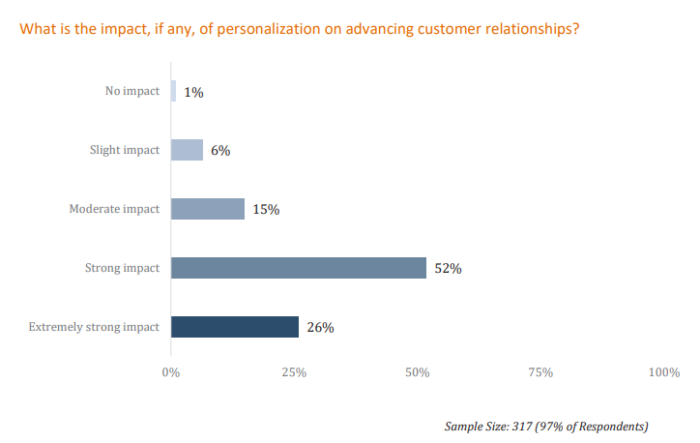
We're not discussing that personalization works.
Personalization enables marketers to interact with a huge customer base in ways they have never been able to do before.
You can use individual customer names, offer relevant products based on previous purchases, and generally treat customers like the people they are.
Even consumers are familiar with the power of personalization.
Gladly's 2020 Customer Expectation Report found that 84 percent of consumers will spend more on a brand that offers personalized customer service.
Before I start sounding like any other content writer talking about personalization in marketing, let me ask you a question.
Even if the above statistic says consumers are more likely to buy when they get personalized service, is this the best thing you can do?
In other words, just because people are more likely to buy from a marketer who uses their name than a marketer who doesn't, what about the marketer who uses more than name tags?
Wouldn't this marketer win?
Of course, you can recognize your customers' names. What if you also recognized their tendencies or wrote an email copy like an actual human instead of a business?
How much more effective would that be?
The point is, we may be misusing personalization.
What is real personalization in marketing?
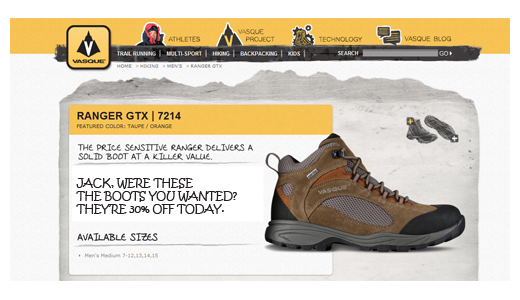
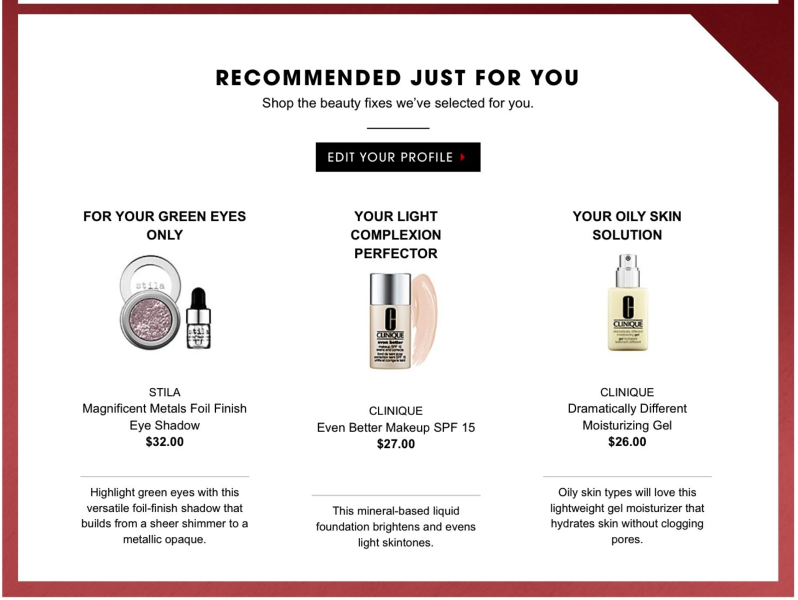
When marketers talk about personalization, they usually refer to name tags, including the recipient's name in their email campaigns, send abandoned cart emails, or recommend products based on previous purchases.
Things like this:
And ads like this:
Here's the thing about those methods. They don't work.
Right. You don't do it. At least not that good.
OK, sure, sometimes a marketer comes around and sees a significant difference in their open rate, engagement rate, click rate, and conversion rate after adding a person's name to their emails.
Most of the time, these marketers are the minority.
Typically, the company experiencing this type of personalization success has a large audience with an already loyal customer base to experiment with.
If the conversion rate goes up a percent or two, it matters because of their hundreds of thousands of customers.
But it's still only a one or two percent jump.
It may not be that important to you.
No matter the size of the business, marketers everywhere value personalization.
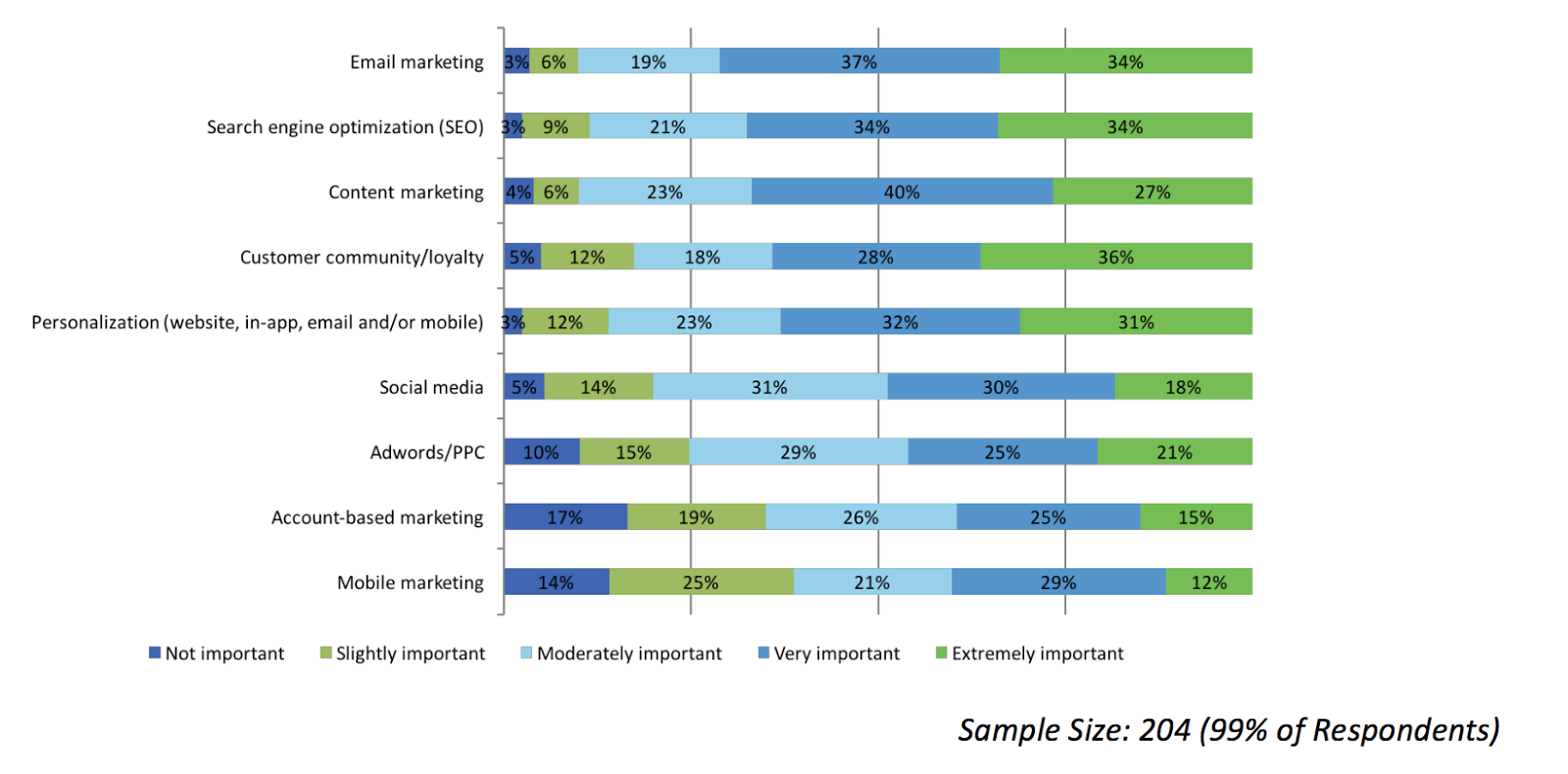
It's hard to blame them when so many studies swear by the power of personalization.
But here's more interesting. Only 31 percent of marketers believe they are using the personalization right and 69 percent believe they don't.
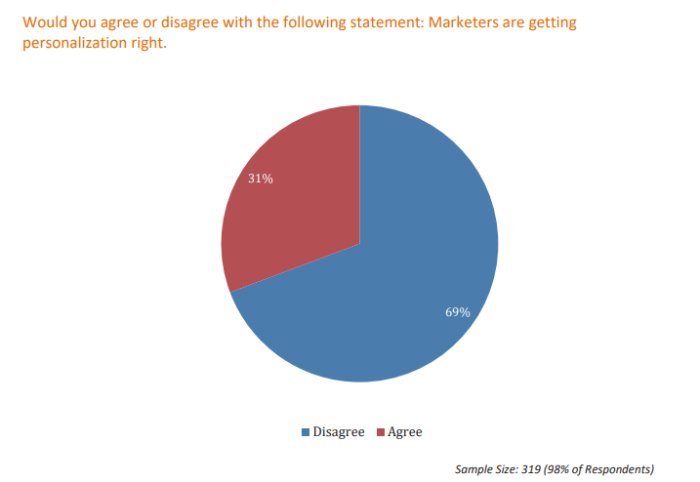
While marketers understand the importance of personalization, most don't know how to do it effectively.
Here's the point: marketers know personalization is important, but they don't know how to use it effectively.
If it is you, you are probably trying to figure out what you are doing wrong.
That's why you're here, isn't it?
Ultimately, personalization isn't about using someone's name or including recommended products. It's about being authentic.
Welcome to the age of depersonalization.
Why depersonalization is far more effective at increasing ROI
Let's start with the question that concerns you.
What is depersonalization?
That's exactly how it sounds.
It personalizes your marketing efforts by making them less personal.
I know that sounds confusing. Let me explain.
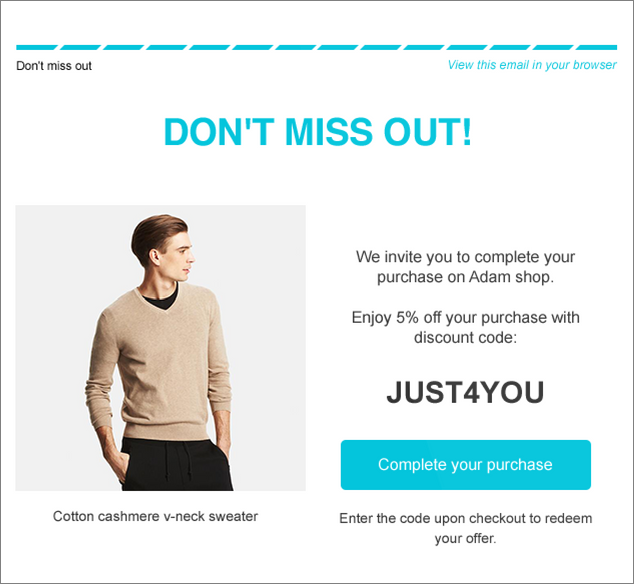
Imagine you received the following emails in your inbox. Which one would feel more personal?
Would it be this one?
Or would it be this one?
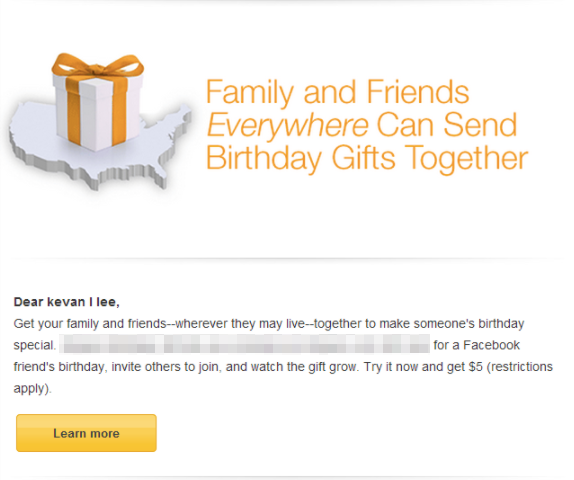
If you are like most people, you said the first.
Why does the first email feel more personal than the second?
After all, the second uses the recipient's name and the first doesn't. Both offer discounts, but the second has a little more detail.
Then why does the first feel personal and the second feel clunky?
The answer is simple. The first is not trying to be what it is not.
The second email uses your name, but you already know that a robot sent the email. Just look at the capitalization.
It feels more wrong than building trust.
However, the first one does not include your name, nor does it include trying to act like a human when everyone knows it is not. This makes the company feel more trustworthy and honest.
That is the power of depersonalization. In fact, there are six more ways you can depersonalize your marketing strategy.
1. Remove name tags from emails and add transparency
I know. Virtually every marketer and their dog insists that using their customers' names will give you better click and response rates.
You are wrong. (Well, mostly.)
The problem with using name tags to make your email feel personalized is that they can have the opposite effect.
Think about it.
Have you ever received an email from someone with your name saying, "You didn't just send this email to me. Who does this person think he is cheating?"
Everyone knows that your email goes to a large group of people, not just them.
So using her name feels insincere.
Think about what Rachel Pedersen's emails look like.
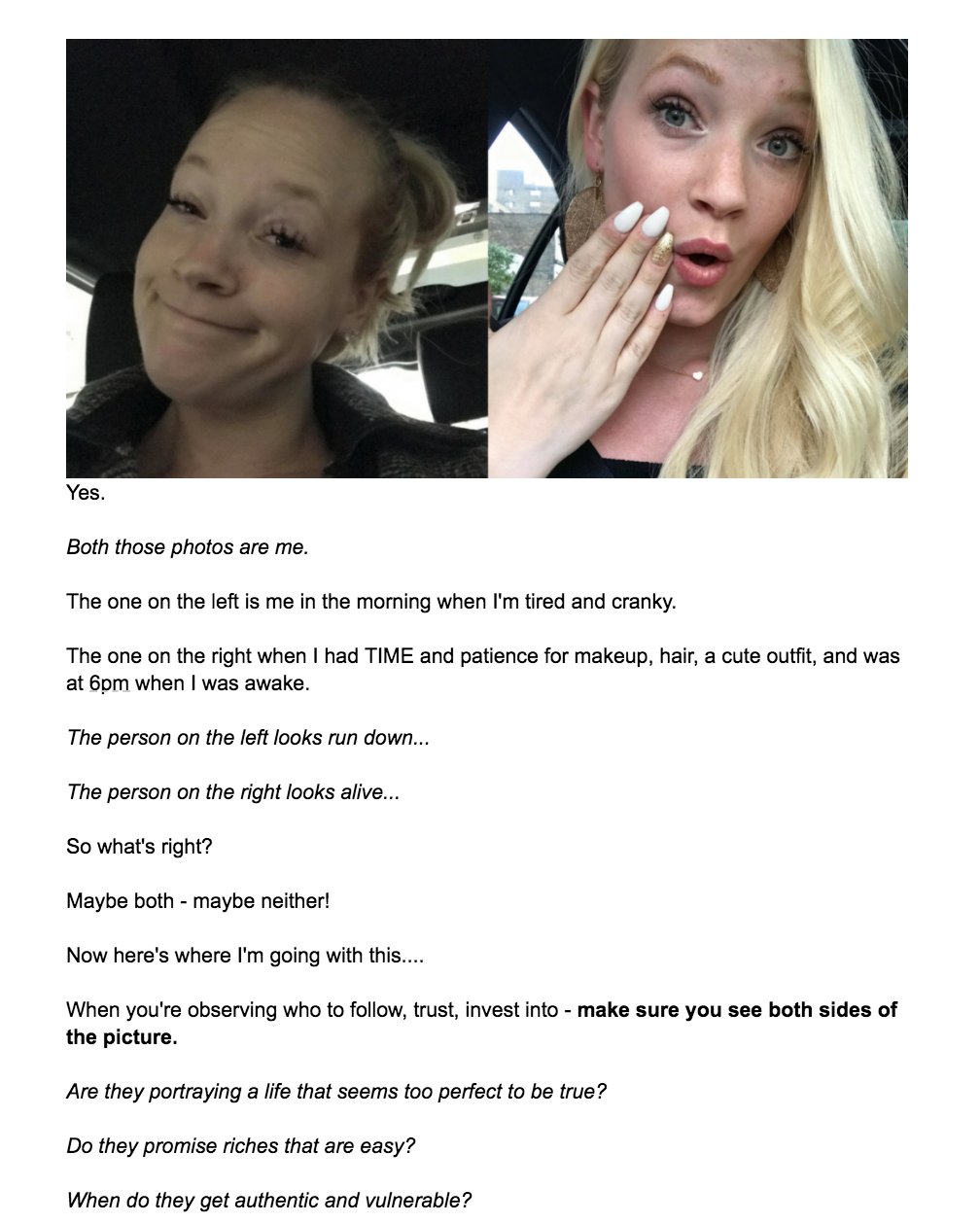
Nowhere in this email does she use my name. In fact, she doesn't use my name in any of her emails.
Why?
She knows that sending email is more like speaking to a large crowd of people than speaking to just a few in a small room.
You're on a pedestal so be on a pedestal.
Email, in particular, is one of the channels where marketers believe in personalization the most.
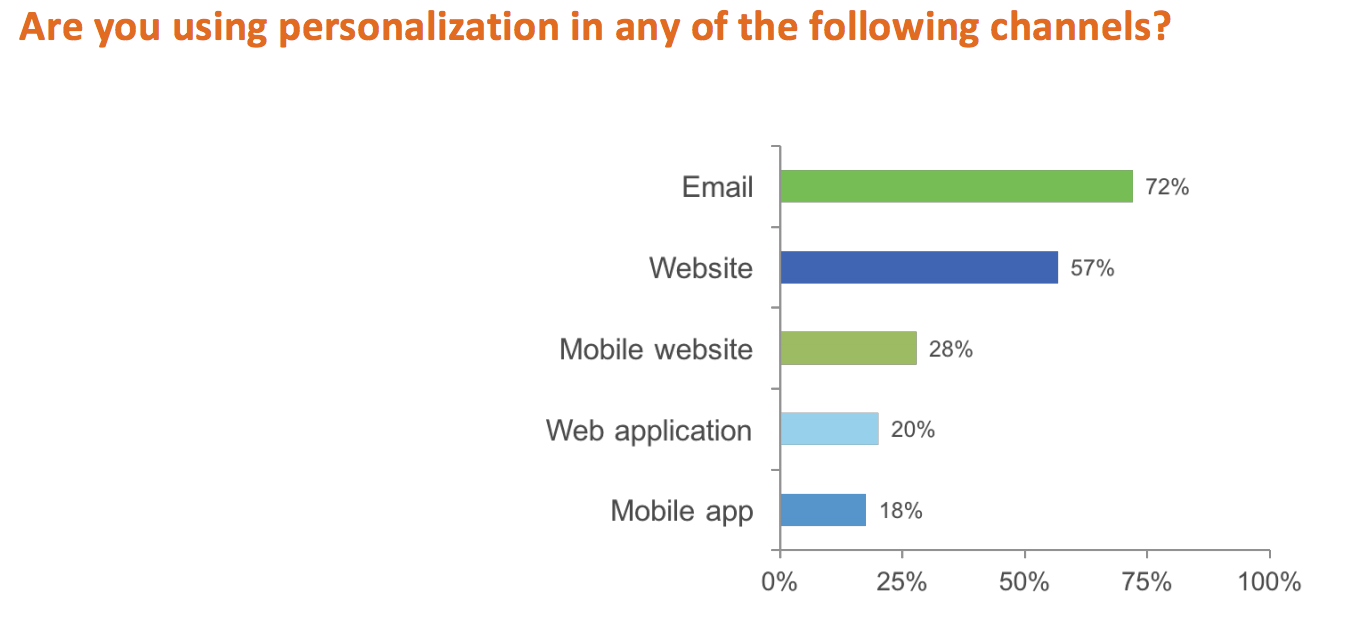
That is exactly why we are talking about it.
But here's the thing about Rachel's email above. While she doesn't use my name, she uses other notable tactics to personalize the conversation.
First and foremost, it is transparent to its audience.
This is far more effective than adding a name.
Here is another email I received from her.
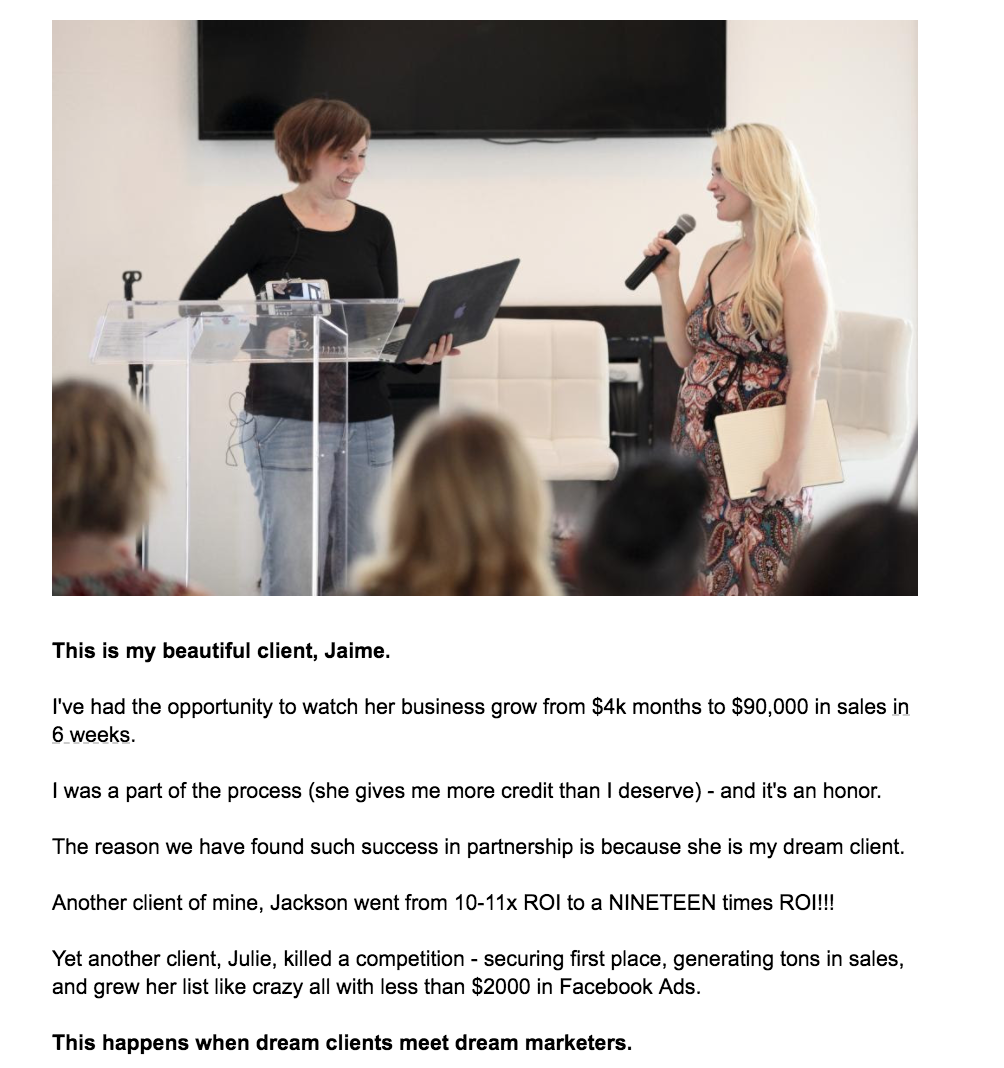
In this email, Rachel creates transparency with her audience by talking about how great one of her clients is and even mentioning that the client gives her more credit than she deserves.
You can practically smell the authenticity dripping from the copy of the email.
When people receive messages like this, honesty confuses them and makes them more willing to trust you.
If you want this effect in your email campaigns, drop the name tags and talk about yourself transparently.
Your listeners will appreciate it.
2. Provide a real value before asking for anything
Too many email campaigns are trying.
They ask the recipient to buy, give, or sacrifice.
Instead, email campaigns should add value.
Well, I'm not saying you should never ask your audience to do anything. After all, CTAs are important.
What I'm saying is that you don't ask your audience to do anything until you've provided a remarkable amount of value.
For example, consider Michael Hyatt's 20-to-1 rule:
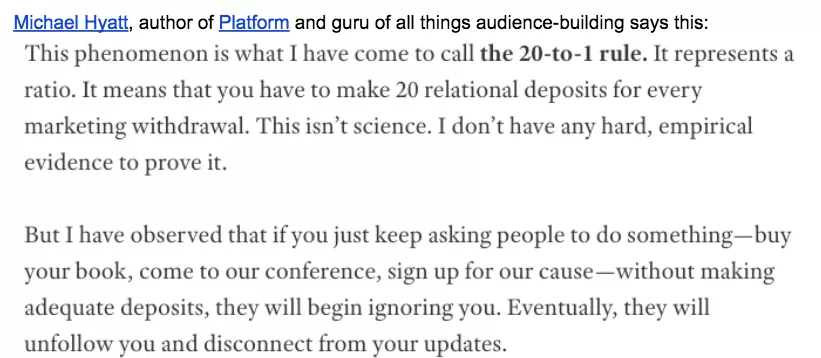
He claims you shouldn't charge anything until you have "deposited" 20 items of value.
This may sound like a lot, but you don't have to follow the number exactly.
But his point stands.
Provide value before asking your audience to buy, commit, or sign up.
Ask yourself, “What would really attract my customers? How could I offer them immense value? "
Then create some content or downloadable worksheet of remarkable value.
Here's another email from Rachel Pedersen where she adds value to the reader from the get-go.
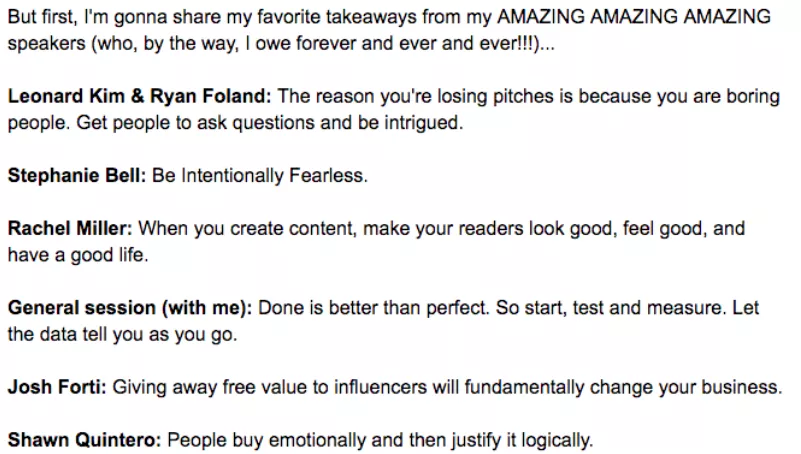
Please also note this email I received from Trevor Mauch:
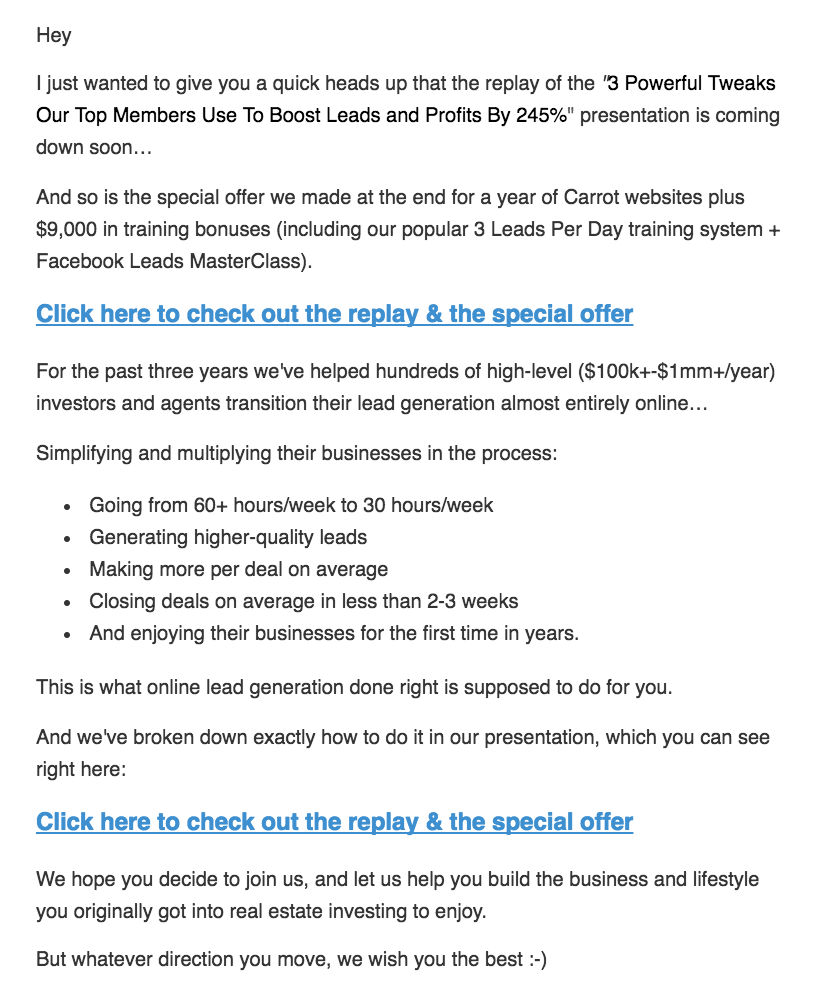
Or this email.
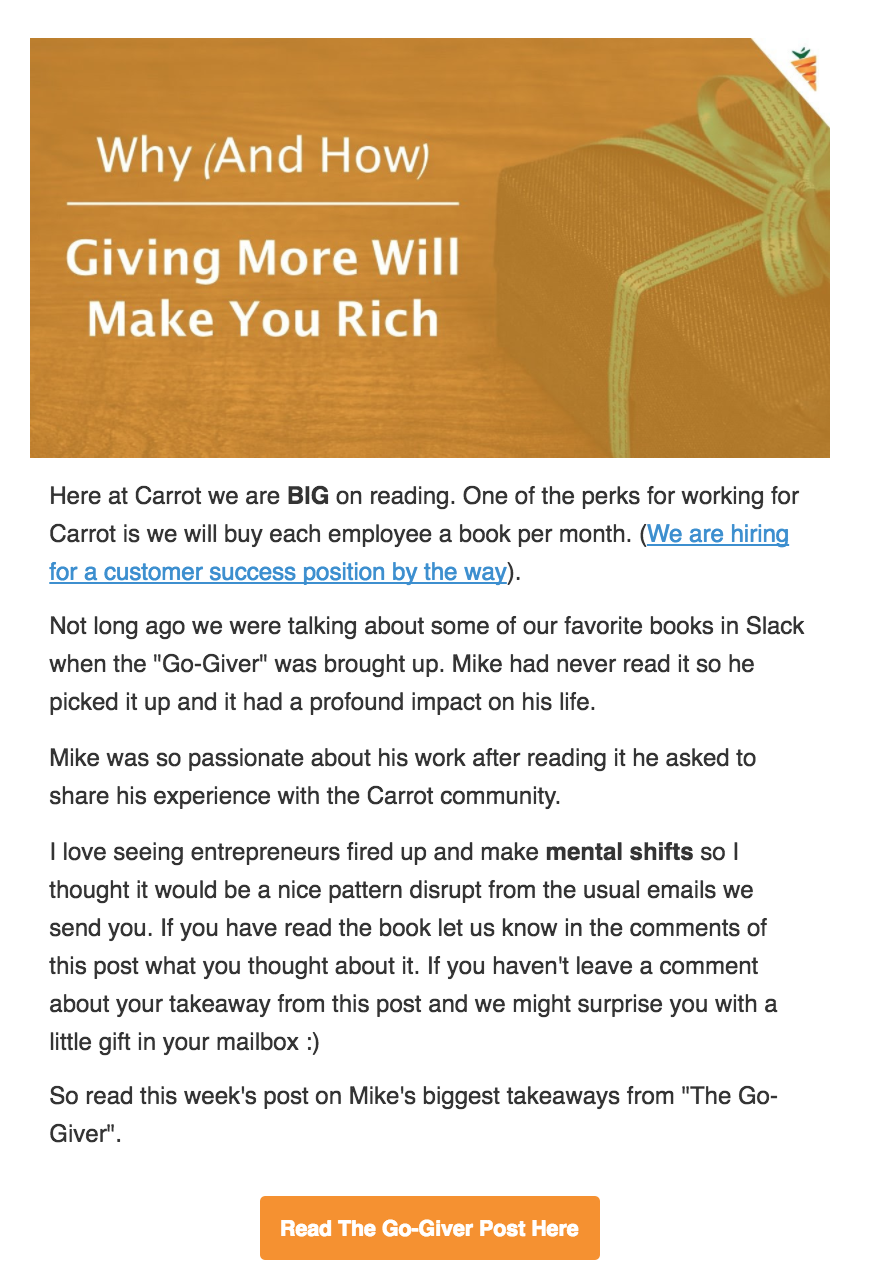
Do you already see a sample?
Each of these emails offer value instead of asking for a purchase.
They all initiate the customer business relationship by giving something meaningful.
When they ask about something, readers are more likely to answer.
After all, what's coming around, right?
4. Write like a real person
There's nothing worse than giving out a person's name and recommended products than writing like a robot.
Unfortunately, an impersonal voice haunts most marketers' personalization attempts.
In this case, the recipients lose even more trust in the company.
In fact, it's probably better to just do one thing or the other. Either write like a robot and remove the fake personalization or email just one person at a time with authenticity.
Of course, none of these options make very much sense in an effective email strategy.
But there is another option.
Namely, remove the fake personalization, but create real personalization by writing like the person you are.
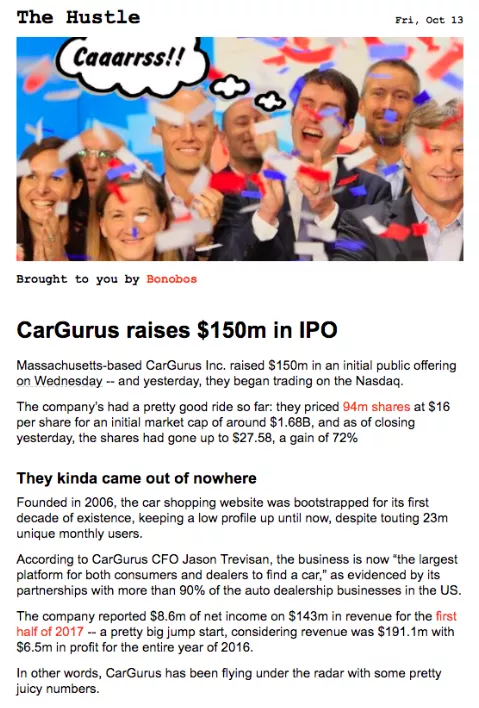
The Hustle is one of my favorite newsletters for precisely this reason.
Here is one of her emails.
Here is another one.
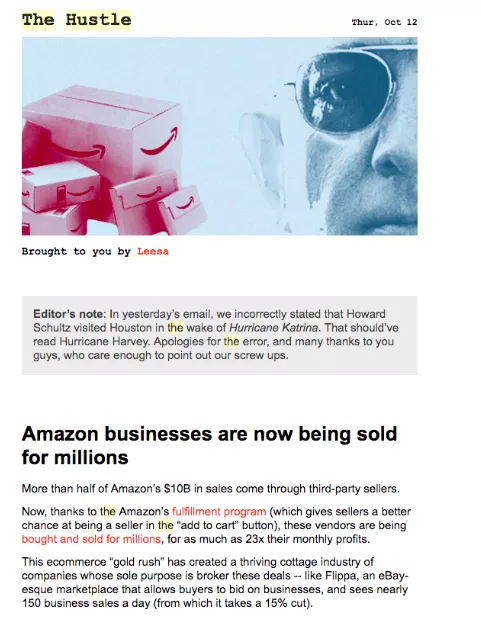
While none of these emails contain my name or attempt to show a false sense of personalization, they do something else that is far more powerful.
They use a consistent voice and a fun and distinguishable demeanor to express their stories and ideas.
This makes your publication feel more personal, honest and authentic than most newsletters.
You can use the same strategy to build trust with your recipients.
In other words, write like a human, and your content will attract people.
You will know if you are faking it.
5. Focus on existing customers
It's no secret that existing customers are more valuable than new customers.
They are more loyal and profitable and generate more sales.
For example, returning customers are 60 to 70 percent more likely to convert.
Plus, you don't have to pay to get them.
But how do you turn old customers into new customers?
The secret could be to depersonalize your marketing efforts.
This is what the upside down funnel looks like.
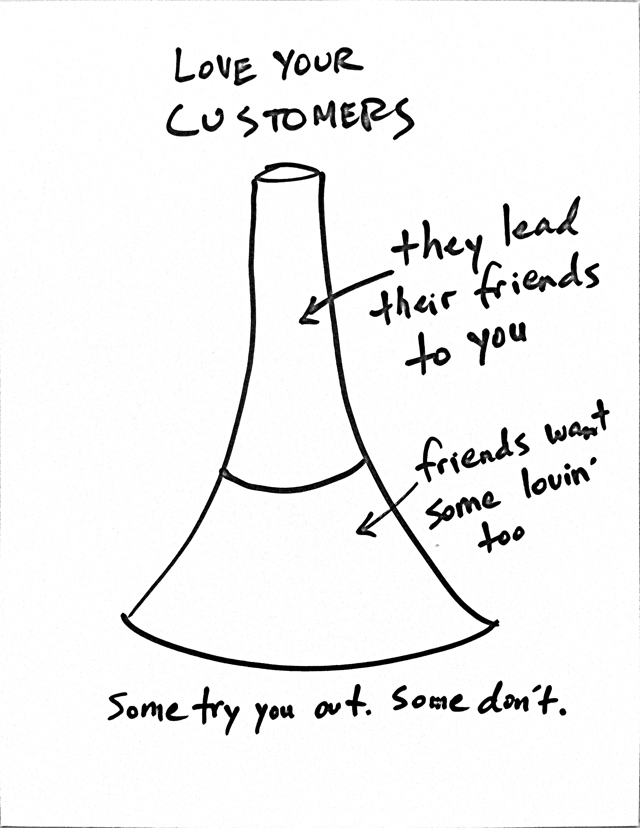
When existing customers become evangelists for your company, they are essentially telling their friends.
Then her friends become customers.
But how can you do that?
Personalization is not the answer.
Depersonalization is.
When you create marketing campaigns that instill trust, express authenticity and transparency, and sound like a real person, you can turn your existing customers into evangelists.
When people feel like your company has a distinct voice and an authentic personality, they will fall in love with you.
If they fall in love with you, tell their friends.
6. Really listen to your audience
If you really want to add personalization to your marketing campaign by depersonalizing your efforts, you need to listen to your audience.
Nobody knows your audience better than yourself.
Make a habit of asking them questions and listening to their answers.
This is one of the best ways to add personality to your emails without spoofing them.
Here is an email I received from Scott Oldford:
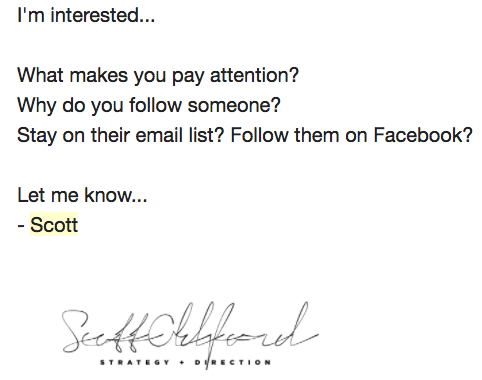
This email is wimple but mighty powerful. It just asks a few questions and leaves it at that.
If you want people to reply, don't add anything else to the email. Just ask good questions.
Then write down their answers and you will find new ways to reach them.
Here is another email I received from Scott:
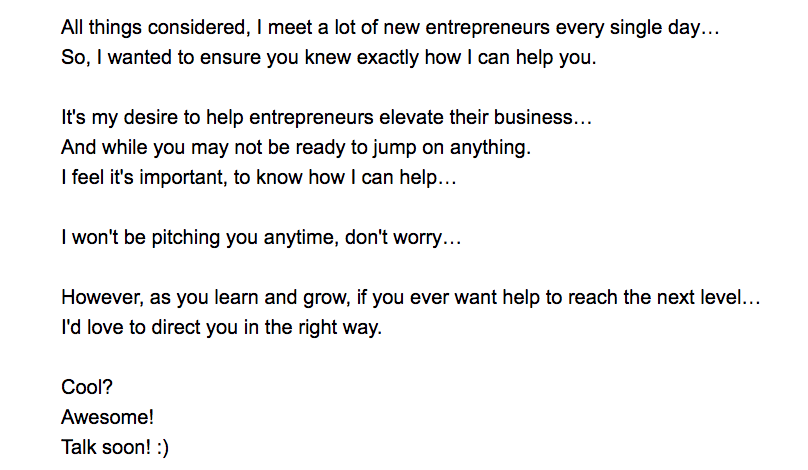
In this email, Scott is asking people to respond with ways he can help them.
Nothing says "personalization" like a question.
Fortunately for you and your marketing campaigns, the easiest way for marketers to ask questions of your audience and hear their answers.
Conclusion
There is a lot of advice out there on personalization in marketing.
Some marketers recommend using a blue button instead of a red one and other marketers recommend using red instead of blue.
It's easy to get frustrated with so much conflicting advice.
The reason there are so many conflicting strategies out there is that most personalization efforts result in negligible gains.
However, depersonalization is effective.
When you remove name tags from your emails and add transparency to how a real person is writing, adding real value, focusing on existing customers, and listening to your audience, you'll generate leads and revenue like never before.
And not because your marketing campaigns feel personal, but because they are personal.
What personalization tactics do you use to reach customers and prospects? Are you trying depersonalization?