
Utilizing Guerrilla Advertising in Paid Social Advertisements Technique
For many years, traditional marketing offered brands the choice between print, TV or radio advertising when they wanted to be informed about a new product or initiative. In the 1980s and 1990s, when advertising flooded all media channels, companies began to realize that standing out would require something else.
Consumers saw brand interactions like they had never seen before, and the term guerrilla marketing was coined. With the advent of the internet and social media, marketing became a whole new endeavor for customers.
Let's examine what guerrilla marketing is and how you can use this tactic in building your paid social ads strategy.
What is guerrilla marketing?
Guerrilla marketing is a marketing strategy in which a brand or company uses the element of surprise to promote a new product. This tactic can involve creative interactions with the public to make an impact.
Guerrilla marketing tactics require more creativity and imagination than financial investments, and success is often measured by how widely the activation or event is shared.
Guerrilla marketing ideas intentionally contradict traditional marketing by targeting the impact.
The aim is to showcase a product or brand and increase the likelihood that people will buy it or share what they have seen and experienced with their friends, who could also be potential buyers.
In social media marketing, this can mean sharing experiences with large communities or followers, generating waves of reaction, or even going viral, which can be considered the greatest success of all.
Why is it called guerrilla marketing?
The term was popularized by Jay Conrad Levinson's well-known guerrilla marketing book. The marketing term is borrowed from the historical term "guerrilla warfare", which refers to the use of unconventional means to achieve a goal and is based mainly on ambush and the element of surprise.
The digital landscape has changed the way we use this tactic as online guerrilla marketing is a little different than it was in the past, but the concept is the same.
How is guerrilla marketing different?
The guerrilla marketing strategy is different from other marketing efforts. It is often more about direct interaction with the public or profound impact on a small target group than broad but superficial reach through traditional media. It is usually the result of a fresh, creative idea that gives the freedom to build momentum and enthusiasm without restrictions.
6th Ways to Use Guerrilla Marketing in Advertising Campaigns
Any business can consider aspects of this marketing style when creating advertising campaigns. If you have access to creative minds and your leadership team is comfortable with some risk, there are ways to borrow from the power of guerrilla marketing.
Remember, what makes these guerrilla marketing examples stand out is how they deviate from the norm. That means any company or industry can explore this tactic by simply being different. When you are ready to get close to your customers and create something fresh and surprising as they experience your brand, you can benefit from it.
It could appeal to large established companies that have the resources to perform big stunts or ventures, but it could also appeal to small businesses hoping to make waves on a budget.
Guerrilla marketing for startups can also be profitable, as these companies often have limited marketing budgets.
We're going to look at the roots of each type of guerrilla marketing and see which ones go well with your paid social ads strategy. Make sure you have the basics of your social media marketing and read on to see how these brands can surprise their audiences and make a significant impact.
1. Stealth guerrilla marketing
Stealth guerrilla marketing advertises people without them knowing they are an audience for your campaign. An example would be product placement during a favorite show or movie where you barely realize you're watching technology, auto, food, or beverage brands, to name a few.
Given the advertising disclosure rules put in place by the Federal Trade Commission, this is a tactic largely discouraged on social media. Internet stealth marketing could be poorly received, and if you breach FTC guidelines you could get into trouble.
2. Environmental guerrilla marketing
Environmental guerrilla marketing, also known as ambient guerrilla marketing, means marketing to people who are exactly where they spend time traveling from place to place. In the physical environment, this can mean advertising in bus stops, on city benches, or with graffiti or reverse graffiti in busy city centers.
These are the types of advertisements that you often see on everyday items in public spaces like door handles, pool cues, and much more.
A good example of this would be the KitKat benches in urban areas, where the bench's planks have been painted to look like the chocolate bars in a KitKat board.
3. Astroturfing
Astroturfing is a type of guerrilla marketing that most experts approach with caution. In Astroturfing, companies pay individuals to endorse or promote a product while acting like real customers.
It can be a delicate balance to do this memorably without generating resentment when your audience perceives your actions as particularly duplicate.
In a social campaign, this can include fictional stories from characters pretending to be experiencing a brand, or even an imaginary exchange in the comments of a paid social campaign that gets more attention.
4th Ambush guerrilla marketing
Ambush guerrilla marketing is when a brand finds a way to target or abduct an audience from a large event or other large audience gathering. Without formalizing a partnership with the actual event, a brand could still find a way to draw attention to their marketing and get so much more traffic than usual.
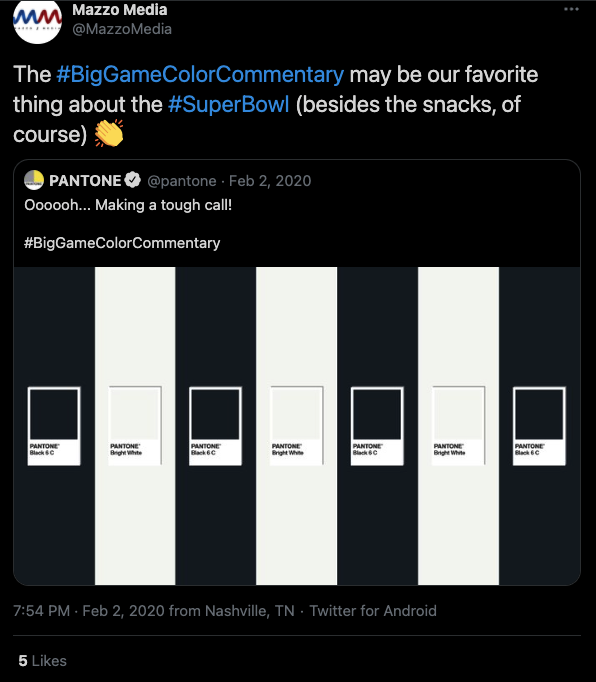
A good example of this would be the Pantone color comment campaign launched on Twitter related to the Super Bowl.
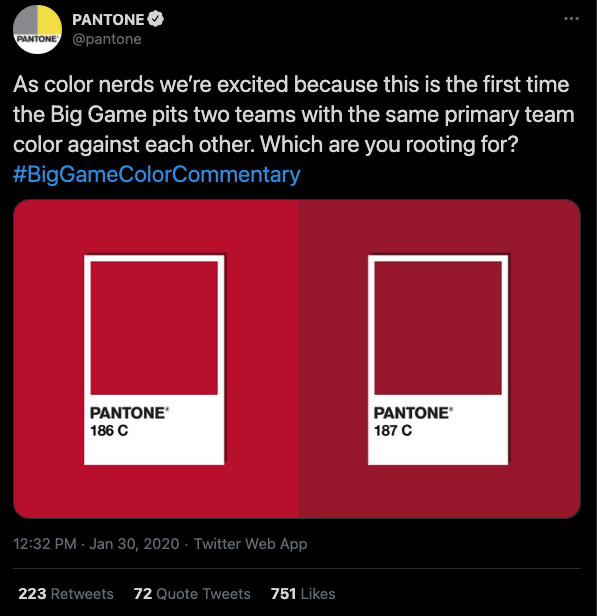
The Pantone Twitter account was posted live that day and features what they called #BigGameColorCommentary. They found a way to attract attention and excitement for a large event without being officially affiliated with it.
5. Street guerrilla marketing
Street guerrilla marketing takes place in the street or other public places that many people pass by frequently.
You may have seen this when people were gathering in busy city centers or subway stations to hand out flyers or walking around with sandwich boards to target specific audiences who can be present and pick up their message.
While street marketing implies most of the impact is being made on real people in public spaces, there are ways to use this type of contact to gain new followers on social media by offering promos or coupon codes, or through other engagements.
Businesses can also use their social media accounts to send people to a physical location to launch an experience.
6th Experimental guerrilla marketing
This type of guerrilla marketing involves all kinds of interactive campaigns, experiences, and activations that involve the audience in an experience. The audience becomes participants, creating a personal, unforgettable experience for everyone.
These types of campaigns offer strong word of mouth and help people experience the brand.
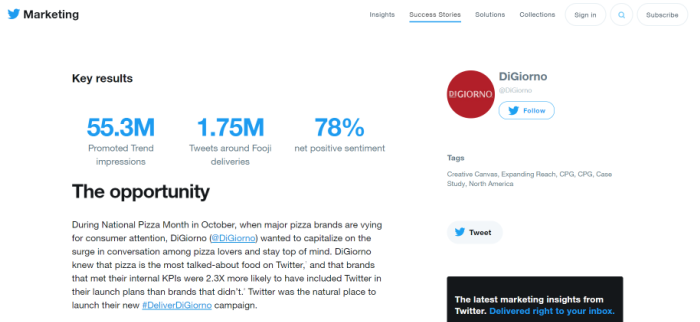
This type of marketing could include a reach like DiGiorno's, which was launched during their #DeliveryDiGiorno promotion on Twitter. During National Pizza Month, DiGiorno tweeted a promotion encouraging followers to tweet with the hashtag #DeliveryDiGiorno.
Customers who participated received a free frozen pizza delivered to their home. This campaign achieved over 55 million impressions on Twitter with only 1100 pizzas delivered.
3 Benefits of guerrilla marketing
Guerrilla marketing could be an excellent solution for smaller businesses with small budgets and less to lose, where the public could forget mistakes faster. Guerrilla marketing definitely has positive effects when you feel up for a challenge.
1. Low relative cost
Guerrilla marketing is more about creativity and timing than big marketing expenses. Guerrilla marketing, which bypasses deep investments in traditional media advertising and uses the idea to get attention, relies on word of mouth and well-deserved media coverage to get a brand message across. It may take some time to run, but if it works, the investment will be small compared to the return on investment.
2. Unlimited creative potential
Fresh, creative ideas work best here as they have to rise above the chatter of traditional advertising. There are already so many social media posts and ads out there that it takes a really unique idea to stand out.
However, it rewards the most creative and surprising ideas, which means that the most daring and innovative brands could benefit from it.
3. High Potential Return on Investment (ROI)
If you can tap into something unique and contemporary in a way that the audience really loves, then you can take your message further than you ever hoped it would. In some cases, campaigns like this make the news and get shared because everyone loves the idea. It might be an inexpensive idea that gets the most attention.
4 C.Guerilla marketing
This type of marketing falls into the “proceed at your own risk” category because while the gains can be huge, the losses can be a terrible lesson in terms of PR and reputation management. Big brands in particular can lose a lot if things go badly.
Consider the following risks and challenges before proceeding.
1. Ethical and Legal Concerns
In many cases, the most effective guerrilla marketing campaigns are either somewhat or completely shady when it comes to local statutes and regulations. Can a large established brand take the risk of postponing this envelope? Can a small business afford the potential fines or penalties?
2. The creative demand could be too high
The power of guerrilla marketing lies in the creativity and freedom to react to the latest ideas without restriction. Too much red tape could destroy the best ideas long before they are let loose in the wild.
It's also possible that you will spend time thinking about ideas that just aren't creative enough to be worth the risk. A small team may be lucky enough to do an incredible stunt that makes headlines, but many of these tactics require your team to have a deep understanding of marketing, advertising, PR, social media, digital marketing, paid social advertising, and other areas. Does your team have the necessary knowledge?
3. Clarity is crucial
Occasionally a marketing campaign misses the mark or the public misunderstands the message. If this is the case with traditional advertising, it can often be corrected before too many people see the ad. The goal of guerrilla marketing is to develop a good idea and share it by the mainstream media and word of mouth.
When you're posting an idea that has so much potential to get that far, you better hope that you get the message or that a huge audience now has the wrong idea about your brand.
4. Can you absorb the risk?
What if the ad is misunderstood? You might or might be punished for your idea. Activating it could turn into a PR nightmare that would require a lot of resources to deal with. Do you have the resources to deal with it when it goes wrong? When best suited for smaller brands with small budgets, it's unlikely they have the human resources, resources, or power to nip a wave of bad advertising in the bud.
Conclusion
What elements of guerrilla marketing could you use in your paid social ad strategy? You need to make sure you understand paid social media marketing before trying to add that layer.
Remember that once you're ready to try, your marketing reach needs to stand out from a variety of other ad campaigns. Mix in too much and you could pour your investment down the drain.
Get creative and don't put too many barriers in front of your best ideas. Let your creative teams brainstorm and try out a few wild ideas every now and then. Harness the creative power of an experienced digital marketing team that can guide you and help you avoid missteps.
When people see what you are doing, they must be surprised, pleased, and possibly even involved in what you are doing. If you can turn these little experiments into exciting experiences, you can make big profits.
Are You Using Guerrilla Marketing Elements In Your Paid Social Ads? How are you going to do it
See How my agency can drive Firmly Traffic volumes on your website
- SEO – Unlock tons of SEO traffic. See real results.
- Content Marketing – Our team creates epic content that is shared, links accessed and visitors drawn.
- Paid media – effective paid strategies with a clear ROI.
Book a call