
5 Advertising Ethics on Social Media
How important are marketing ethics to your buying decisions?
If you are like most consumers, ethics are very important.
Consumers are drawn to brands that promote sustainability, environmental concerns and social responsibility. Unsurprisingly, we are drawn to brands that bring something good to the world.
By promoting good causes and following marketing ethics, your brand can get much-needed attention and increase the ROI on paid ads.
What is the Top Marketing Ethic You Should Follow? How are you going to incorporate it into your paid campaigns?
Let's start by discussing the basics of marketing ethics.
What is Marketing Ethics and Why Are They Important on Social Media?
Marketing ethics means having principles for your paid campaigns.
It is a philosophy that focuses on using values such as honesty, fairness and social responsibility to build quality relationships with consumers.
Businesses need to campaign and make decisions based on a moral perspective (i.e., whether a move is "morally good") and a business perspective (i.e., whether it will generate the desired ROI).
Incorporating marketing ethics into your paid campaigns is not only a good idea, but also good for business.
Take a look at these interesting numbers:
- 70 percent of North American consumers believe it is important that brands are sustainable and environmentally friendly.
- Barrons also reports that 35 percent of consumers are willing to pay more to buy environmentally friendly products.
- According to Statista, 61 percent of American consumers appreciate the variety of ads.
- 45 percent of consumers under the age of 34 are willing to do repeat business with an LGBTQ + friendly company.
Consumers respond to ethical brands, and this could even improve your overall image. However, marketing ethics also creates a lot of debate as the concept of “right” and “wrong” can be subjective.
There are also cultural, ethical, and social issues that marketers need to consider. Brands could face backlash from consumers who claim advertisements are "offensive", "insensitive" or "misleading".
5 Marketing Ethics for Paid Campaigns
I've seen a lot of ethical brands and campaigns in my career, and I can tell you that ethical marketing integration works when done right. You can win customers and help a good cause at the same time. It's the perfect win-win-win situation!
Here are the top five marketing ethics that you should be using to increase paid campaign success.
transparency in marketing ethics
In the age of social media, people are demanding that brands be transparent.
They want to learn how the product is made, how materials are sourced, where they are made, brand affiliations and everything about the brand and its products. The more information people have about the product, the more influence it has on their decision-making process.
According to Label Insight, 94 percent of consumers are likely to remain loyal to transparent brands. In addition, 56 percent remain loyal to a brand if it offers complete transparency.
Brand transparency proves that a brand is real and trustworthy. Not only can this attract more people, but it can also lead to higher customer loyalty.
To be transparent, brands should post verifiable information about products and disclose affiliations. This can be done in paid social campaigns by taking a look behind the scenes of your offices, sharing data, and transparently presenting the functions of your products and services.
F&B brand Panera believes that people have the right to know more about their food. It is precisely for this reason that the brand launched the “Food Interrupted” series to increase transparency through interviews with experts in the food industry.
The video series informs viewers about plant-based nutrition, animal welfare, clean food and transparency of ingredients. At the same time, they have increased brand credibility and consumer confidence.

This will avoid crossing the line
Remember, transparency backfires when you make misleading claims. If you can't back something up, don't say it's the truth. Your company faces a public relations disaster the moment it's caught in the act.
We all want to avoid being labeled “hypocrites” or “deceit”. If you claim that you have certain traits, you might get brownie points from customers, but it's not worth the backlash if you don't.
Social responsibility in marketing ethics
Social responsibility means making positive change by helping people in need or supporting good causes. When a brand is known to stand up for what is right, it builds customer trust and loyalty.
They say you have to be the change you want to see in the world. As individuals, we often use small acts to support the causes we love.
In contrast, corporations – especially large corporations – have more power and resources to create positive change. Because of this, brands that strive to promote good are more likely to gain wide support and popularity.
Here are some popular reasons that encourage social responsibility:
- protect the environment
- Support of non-profit organizations
- Quality labor policy
- voluntary work
- sustainable and environmentally friendly products
How do you incorporate this into your social campaigns? Consumers want to see how a brand makes an impact. Share a portion of the sales with donations, volunteer work, or
oppose unjust politics.
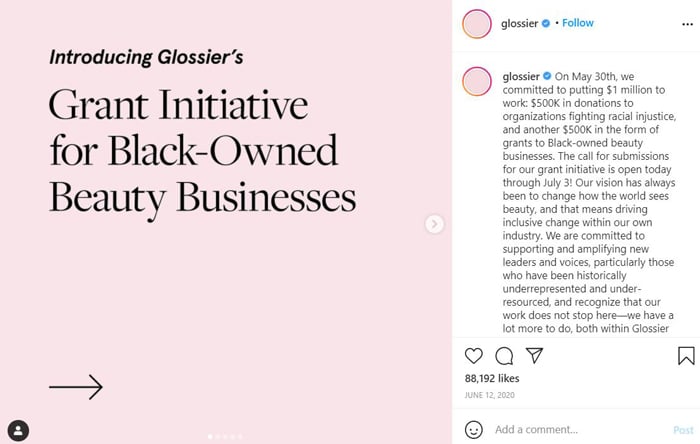
For example, Glossier supported #BlackLivesMatter by donating $ 500,000 to provide grants to black-owned beauty companies and the other half to organizations that fight racial injustice.
We all make mistakes, and so do brands. Social responsibility therefore also means getting involved with the mistakes you make.
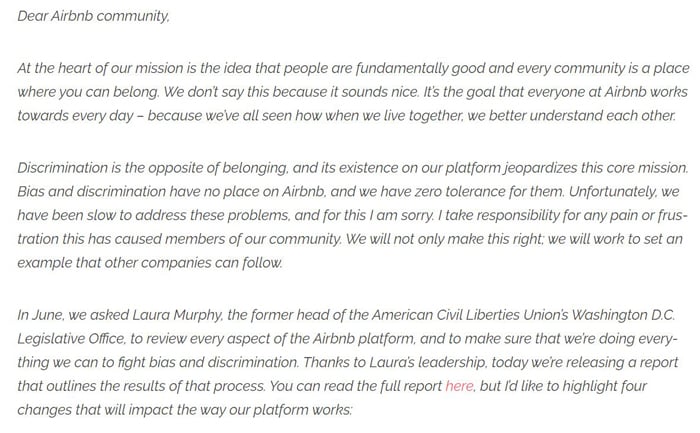
When Airbnb came under fire for discrimination and racial profiling, Airbnb CEO Brian Chesky sincerely apologized and put in place solutions to combat it.
They also created a “We Accept” video to show their support for diversity and inclusion.
This will avoid crossing the line
Companies that want to embody social responsibility must avoid making insensitive comments or statements about race, religion and politics. Once you claim that you are committed to a certain cause, there is no way you can take it back. Failure to adhere to your principles is against marketing ethics and puts your business in a bad light.
justice in marketing ethics
Fairness is about accurately portraying the product or service and weighing the benefits of your buyer's needs and your own needs as a for-profit business.
In simple terms, it could also consider moral principles when dealing with business.
When marketers are promoting a new product, the information should be accurate and free from misleading claims. If a product is harmful to children, it is best to include a warning.
Consumers may also prefer brands that treat workers fairly or market products without cruelty. Supporting brands that adhere to fair trade practices empowers both employees and their communities.
For example, Patagonia is a passionate advocate of fair trade. They ensure that workers have access to living wages and quality working conditions.
Although consumers pay premium prices for their fair trade products, the money is used to fund community projects, day care centers and health programs.
In the video "Fair Trade: The First Step", the brand has published a detailed documentary about the quality of life of its employees.
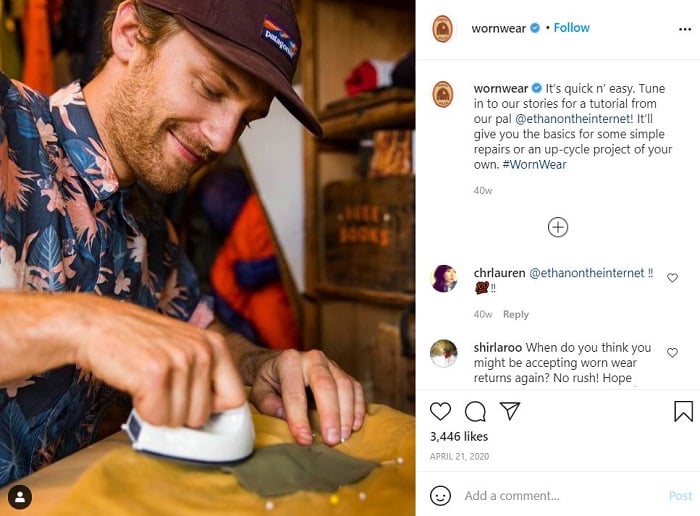
To reduce the environmental impact, Patagonia also encourages consumers to reuse and repair its products. They even host worn wear events across the country where consumers can get their items repaired for free.
The Worn Wear Instagram page has pictures of these events and how-to videos to help users repair their Patagonia products themselves.
This will avoid crossing the line
To emphasize fairness, you need to take a behind-the-scenes look at your day-to-day operations or your company's decision-making process. We want to impress consumers, but it's just as important that they stay real. Instead of a commercial using scripts, give real insights into how your brand and employees are doing things.
Marketing ethics honesty
Honesty is about being truthful about the characteristics and capabilities of your products and services. Your products need to be able to deliver on the promises made in your ads.
Unfortunately, many brands make exaggerated claims and false comparisons. They will claim their products are top notch just to get more sales. Or they ask for lower prices.
A common example is additional fees that add to the overall cost of a product or service. A car company may not disclose pre-delivery inspection fees for a new vehicle, or a cell phone company may hide activation fees.
Many companies have no qualms about lying openly to attract customers. However, this can have real ramifications.
Products that do not meet customer expectations can receive negative reviews. Once a product receives negative reviews online, it affects your bottom line. Getting rid of your bad reputation on the internet is also difficult.
In the worst case scenario, you could be pressured to refund sales or even get sued.
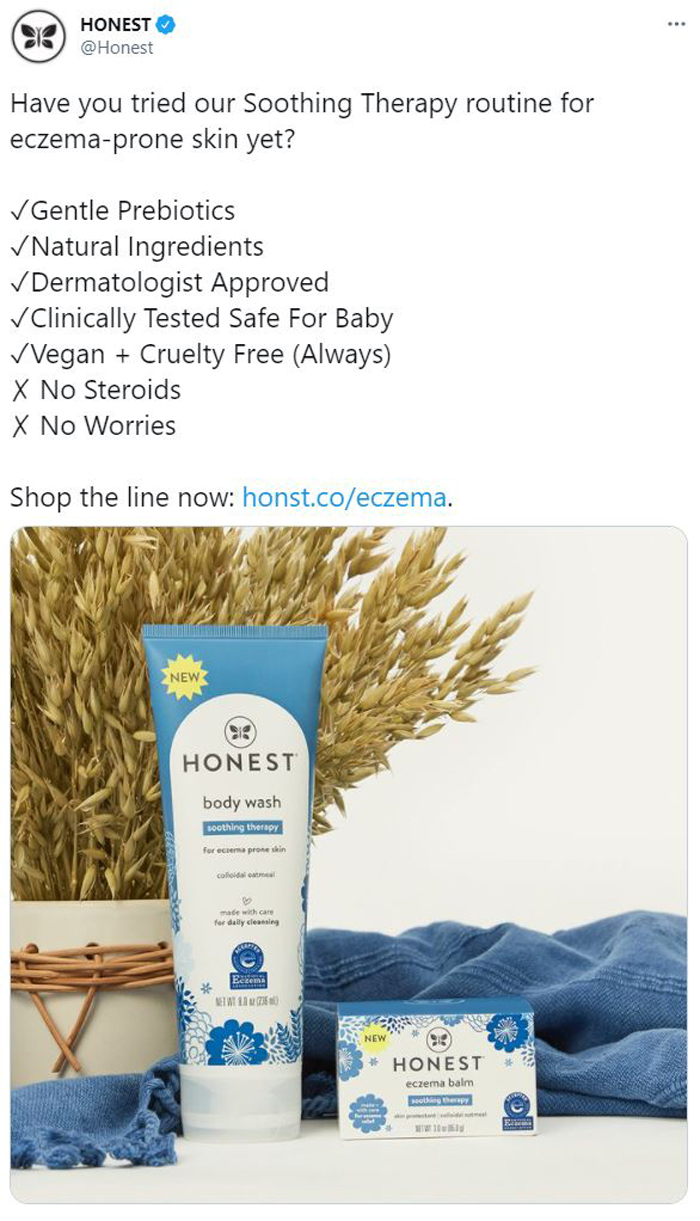
Actress Jessica Alba’s consumer goods brand Honest Company lives up to its name. Their products are known to be safe for babies as their “NO list” says they avoid 2,500 ingredients or materials.
For example, their Honest Body Wash is dermatologist approved, clinically tested, safe for babies and made from natural ingredients.
This will avoid crossing the line
Paid advertising helps consumers learn about new products and helps brands make a profit. However, false advertising can be harmful to both parties.
If you really want to shine, meet the product certification standards in your industry. Get your products tested before launch and think about how to highlight your best features without going overboard.
Building an ethical Community
Many ethical brands have gained massive popularity by building a strong community and giving back.
Focusing on the real impact they can make in their community attracts groups of like-minded people. Because having common interests and working towards a common goal brings people together.
By helping a specific cause or community, you can set yourself apart from the market. At the same time you improve the quality of life for everyone.
The TOMS shoe brand has a buy-one-give-one model. For every shoe it sells there is a free pair for those in need. Their paid social ads even highlight their marketing ethics.
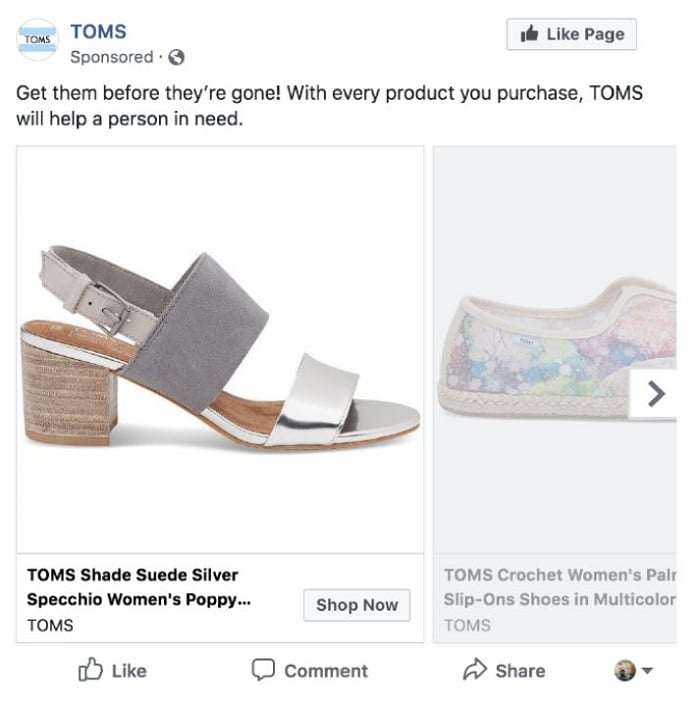
To raise awareness, they have an annual initiative called “A day without shoes”. During the event, consumers will take photos of their bare feet to draw attention to people who do not have access to simple shoes.

This will avoid crossing the line
It's easy to say that your brand loves volunteering, but you have to live up to your expectations. Don't just volunteer for an afternoon or host events for a photo op.
Just like TOMS, stick to your cause and have a long term goal. Create a business model that you can use to finance the causes that matter to you and make them part of your branding.
Conclusion
Honest, transparent and socially responsible ethical brands form the basis for loyal customers. As long as you lead by example, you can transform and create a relatable and real brand.
Start by promoting a social cause and running paid campaigns to raise awareness among your fan base. When you make an effort to help a community or a less fortunate group, your brand can make a real impact.
How will you use marketing ethics for your company?

See How my agency can drive Firmly Traffic volumes on your website
- SEO – Unlock tons of SEO traffic. See real results.
- Content Marketing – Our team creates epic content that is shared, links accessed and visitors drawn.
- Paid media – effective paid strategies with a clear ROI.
Book a call