
Find out how to use buyer journey mapping for PPC campaigns
People might think that PPC is all about playing on a huge budget, but I'm here to tell you that's not entirely true.
Yes, your PPC campaigns can be expensive if you haven't targeted your ads with the buyer's journey.
However, when you combine PPC with customer journey mapping, you are effectively guiding your prospects through all stages to close a sale.
It helps you streamline your funnel and avoid leaks along the way, which can translate into more sales and less money on ineffective PPC ads.
At the end of this post, you will learn how to align your PPC campaigns with your customer journey map and which KPIs to look for in order to measure your success.
What is customer journey mapping?
A customer journey map is a visualization of every step a potential customer takes to complete the desired action for your company.
In PPC campaigns, the action is the sale. You want the right person to click through and turn into a paying customer. To get high conversion rates, you need to understand a customer's entire journey before hitting the "Add to Cart" button.
By combining customer journey mapping with your PPC campaigns, you can identify the actions, motivations, weaknesses and areas of friction for each potential customer and use this information to find out which messages would convert them.
Why you should create a customer journey map for your PPC campaigns
Before we get into why you should combine PPC campaigns and customer journey mapping, let's go back a few steps.
What Exactly Are PPC Ads And How Can They Help Your Business? Pay per click ads (also known as PPC ads) are an online advertising model. Advertisers bid on specific keywords and only pay when a user clicks through.
Here are some of the different types of PPC ads:
- search result
- display
- social media
- Video
- Retargeting
Why should you use customer journey mapping for your paid ads?
Think of it this way: if someone jumps to Google and types in a phrase, they're somewhere on the customer journey spectrum. They may be right at the beginning when they have identified a problem (awareness phase), or they know solutions to their problem and are looking to buy (decision phase).
By curating PPC campaigns for a prospect's journey, you can identify key touchpoints with your brand and the goals each person wants to achieve at each stage. With this in your arsenal, you can ensure that your ads are holistically aligned with the buyer's journey and encourage potential customers to buy.
If you take the time to go through this process, you will get a wealth of information to help you build stronger PPC campaigns. They have created an entire ecosystem to walk the customer through the buying process and make sure they feel safe doing business with you.
In summary, combining your PPC ads with customer journey mapping can help you:
- Gain valuable insights: The customer journey mapping shows you what a prospect expects from you in each phase. This, in turn, will help you meet a prospect's needs and nurture them to the final stages.
- Understand points of contact: The buyer's journey is not linear. A prospect may need multiple interactions with your brand before making a decision. By connecting these touchpoints to your PPC campaigns, you can keep them busy, educate them to make a decision, and avoid losing sales.
- Stronger PPC campaigns: Using all of the data you have about your prospects and customers, you can predict behavior. By predicting what someone will need from you, you can streamline your conversion process and waste less money on PPC ads.
How to create a customer journey map for your PPC campaigns
It's hard to see the website traffic increasing and sales staying the same. Remember, however, that what these visitors are saying is not a harsh "no" but a "not in the moment".
By using customer journey mapping for your PPC campaigns, you will learn more about what a person needs to hear from you in order to eventually say yes. To do this, you need a marketing funnel for each part of the customer journey.
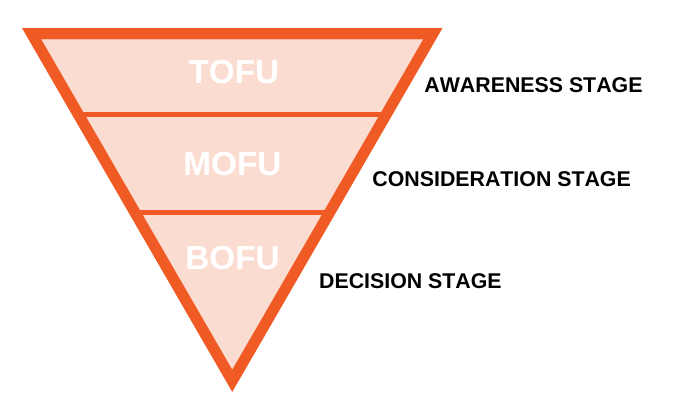
What strategies should you use at each stage of your PPC campaigns? Let's sum it up.
Top of Funnel (TOFU) PPC campaigns
The top of the funnel is the level of consciousness. Your prospective customers are not yet aware of you, and your ultimate goal is to create brand awareness and educate potential customers.
How do you make people aware of your brand with PPC? Here are a few options:
- Show advertisements: Use display ads to give away free value. You want to bring quick profits to potential customers with blog posts, white papers or e-books. Use contextual keyword targeting for your targeting methods. Keyword-related ads are assigned to websites on the Google Display Network. You can also use topic targeting to make sure your ad shows on relevant websites, apps, and videos.
- YouTube ads: With over 2 billion users, YouTube is one of the best places to grow your brand awareness. How to Grow Your Business Using YouTube Ads with a full breakdown of the different ad formats and their success rates.
- Social media ads: Depending on where your audience is, ads on Facebook, Instagram, or Pinterest can add to brand awareness. Facebook offers the most robust targeting that you can use to reach people interested in specific topics or accounts, much like people who are already engaged in your brand.
- Google Ads: Someone in the awareness phase is not using branded keywords. Instead, they use broad words and phrases that relate to their problem. For example "which TV is best" or "hiking backpack". Using different keywords at each stage of the sales funnel can help optimize your PPC campaigns.
The most important achievement for your PPC campaign in the awareness phase is brand awareness. You're not going to convert a visitor into a customer just yet. This campaign is an investment to get the user down the funnel and eventually close the sale.
You want to focus on metrics like:
- Bounce rate
- Time spent on site
- to reach
- impressions
- CPM (cost per 1,000 impressions)
PPC Campaigns in the Middle of the Funnel (MOFU)
Once someone enters the middle of the funnel, the person is interested in making a purchase. These buyers are now aware of their problem and are actively looking for a solution. Your PPC ads will become more specific as the search for a solution gets narrower.
- Google Ads: Make sure you create PPC ads for people who are actively searching for your product or service. For example, if a customer wants to buy a television, their search includes more qualified terms such as "plasma TV", "4k TV", or "best 4k TV for games".
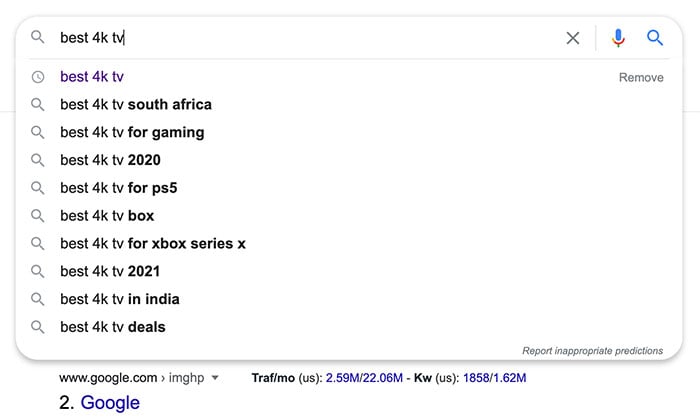
- Remarketing: Remarketing is a powerful component of PPC marketing. You can use it to serve ads to blog readers, users who have spent X times on your website, or people who have downloaded your TV comparison guide.
- Youtube: YouTube has a video ad sequence campaign that can help you raise awareness about your business. You can set it up as a campaign sub-type under the Product & Branding Objectives in Google Ads. You can create a custom sequence or use a sequence template.
The most important performance metric for your PPC campaign in the reflection phase is getting people to understand your product and want to buy it. To do this, give them all the information they need to make an informed decision and move on to the next stage.
You want to focus on metrics like:
- Clicks
- CPC (cost per click)
- Views
- new user conversions
- Conversion rate for new users
Bottom of Funnel (BOFU) PPC campaigns
BOFU is the decision-making phase of the customer journey. Your prospect has identified an issue, done the research, and is ready to make an informed purchase. At this point, your PPC traffic is hot. Users know who you are and are ready to convert. Your PPC ads are getting niche and revolving around keywords with high intent.
Consider the following strategies for the BOFU:
- Target your brand name: If the customer is looking for your name, congratulations! All of your hard work in TOFU and MOFU has paid off. You know your brand and what you offer. The search terms you want to target are specific and include your brand name like "Buy LG 4k TV".
- Focus on high intent search ads: During the BOFU stage, make sure your PPC ad keywords are targeting high-intent search terms like "buy", "price", names of competitors, and location-specific terms.
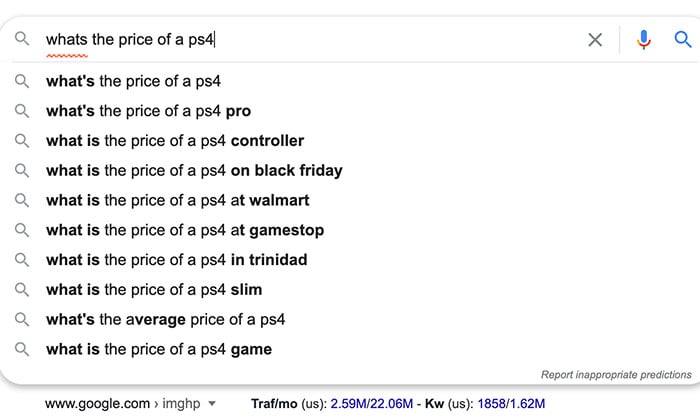
- Use remarketing: Set up PPC remarketing campaigns for customers who viewed a product or left their shopping cart. You can also make an offer to bring them back to your website and complete the purchase.
The most important performance metric for your decision-making PPC campaign is conversions. This is when customers are ready to buy and you should focus on revenue metrics like revenue and return on ad spend (ROAS).
Tips for integrating your customer journey mapping into your PPC campaigns
Now that you know everything about customer journey mapping and how to use it in your PPC campaigns, here are some things to keep in mind:
- Spend time crafting yours Buyer Personas:: The better you understand your customers, the better you can map their journey and optimize your PPC campaigns.
- Write a better ad copy: Do something that gets their attention and stops the user in the middle of scrolling. You want them to feel like they are reading their minds and ultimately pushing them deeper down your funnel.
- Take the time to do keyword research: Using the right keywords is the difference between a successful PPC campaign and a flop. You want to make sure you've mapped your keywords to the different stages and you want to encourage the user to buy.
- Build your remarketing lists: Don't postpone fine-tuning your remarketing. When combining this essential part of PPC with customer journey mapping, it is important to make sure that you are guiding the user through your funnel. You can use Google Analytics to create remarketing audiences and use them for your ads.
- Test, analyze and optimize: The only way to find and fix leaks in your funnel is to constantly test and monitor your results. Optimize your ad messages, look at your conversion path analysis, and tweak your strategy until you have a formula for success for your PPC campaigns.
Conclusion
To sum up, the combination of your PPC campaigns and the buyer's journey is all about getting the right message to the right person at the right time.
You want to make sure you're providing the right content and information regardless of whether someone is entering the top, middle, or bottom of your funnel.
Once you've created that flow in your PPC campaigns, you'll see more flow in your business, as well as predictability, results, and less wasted money on a leaky funnel.
What is your biggest fight when it comes to mapping your PPC campaigns with your customer journey?
See How my agency can drive Firmly Amounts of traffic on your website
- SEO – Unlock tons of SEO traffic. See real results.
- Content Marketing – Our team creates epic content that is shared, links accessed and visitors drawn.
- Paid media – effective paid strategies with a clear ROI.
Book a call