
That is the way you optimize the contribution margin ratio of your organization
Education is the key to success in business, but I'm not just talking about your college or university. I'm talking about self-education.
Understanding the finances behind your business can help you increase your profits, reduce costs, and operate more smoothly. The contribution margin ratio is one of those financial terms that sounds more complicated than it is. This article will teach you how to calculate it, what it means, and how to improve it.
How high is the contribution margin ratio?
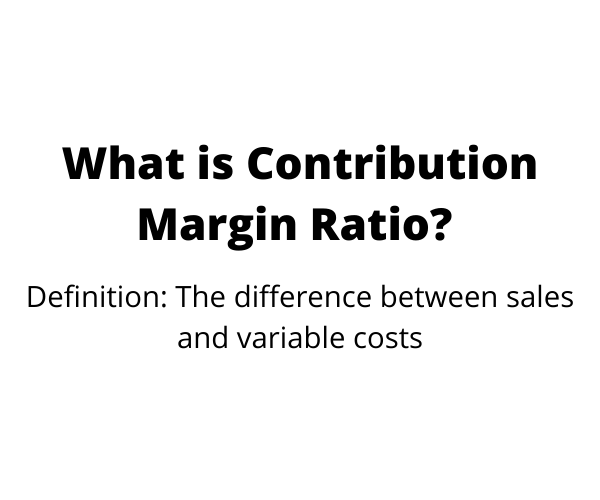
A contribution margin is the difference between sales and variable costs within a company. For example, if an ecommerce store sells t-shirts for $ 20 and the variable cost of making the t-shirt is $ 10, the unit contribution margin is $ 10.
To find out how to get the contribution margin ratio, subtract the variable cost of producing a product or service from the total sales price of the product or service.
The difference is then used for fixed costs such as rent and insurance.
Understanding the contribution margin ratio formula is important as it will help identify changes in your margins and determine the source of the problem.
Here's another example: Let's say you're the manager of an SEO agency and you charge your clients $ 2,000 a month. Typically, you work with a 50 percent margin, which means you spend about $ 1,000 each month on variable expenses and take in a $ 1,000 margin to cover fixed costs. The rest would then serve as your net profit.
In a month, you realize you only have a $ 500 margin and you start the investigation. It turns out that one of the agencies you outsource overseas has increased their prices and this is having a negative impact on your bottom line. You can now deal with the situation by either increasing your prices, renegotiating your contract with your supplier, or shopping for someone who is cheaper.
Without checking the contribution margin set every month, you would not have been able to identify these types of problems.
Fixed Costs Vs. Variable Costs
Part of understanding how to calculate the contribution margin ratio includes fixed costs versus variable costs. You need to understand the differences and similarities between these two spending groups.
Fixed costs refer to expenses that remain the same month after month and do not change regardless of your volume or production. Some examples of fixed costs are:
- rent or lease
- Interest costs
- insurance
These are predictable costs. That's why we use our margin to pay fixed costs because we know how much they cost each month and how much money we need to pay them and still have profit left.
On the other hand, the variable costs change every month and vary depending on the level of production.
For example, if your company produces 100 t-shirts one month and 200 t-shirts the next month, there will be an additional cost for the additional 100 products. You have additional material and additional manpower. Understanding your contribution margin ratio shouldn't matter because you will make a certain profit on every product you make.
This affects the scale and bottom line of businesses. While variable costs can increase, fixed costs stay the same unless you invest in a larger facility or add new staff, which can add to insurance and benefit costs.
Variable costs help companies identify problems in their system. If you find that your margin is way down on a particular t-shirt, then you can do some research to find out what happened. Perhaps the cost of buying the shirt went up, which reduced your margin from 50 percent to just 25 percent.
Whatever it is, understanding how variable costs change can help you evaluate products and adjust when the market fluctuates.
How to calculate your contribution margin ratio
Use the following formula to calculate your contribution margin ratio:
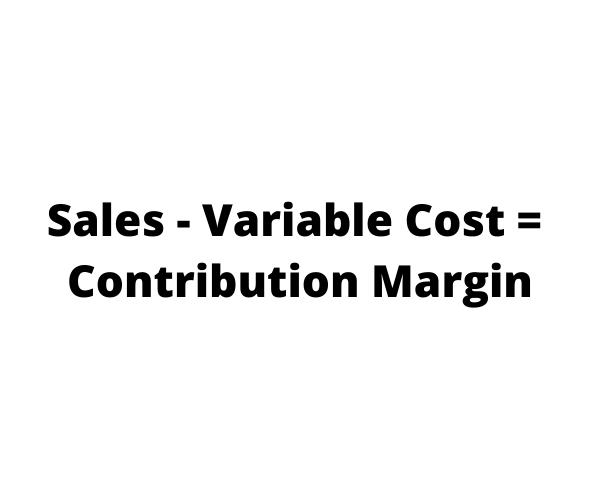
The easiest way to break it down is to look at it by individual product or service. Using the e-commerce example, if your company sells custom rugs for $ 50 and it costs $ 30 to source the materials and make the rug, your margin is $ 20.
In the same scenario, your margin is 40 percent because you get a 40 percent margin on every product you produce.
The same goes for services.
If you run a web design business, there may be no cost associated with goods, but you have manpower and potentially variable costs for the tools and applications you use. Some applications may have a fixed cost, while others may have a fee based on usage.
Let's say you charge $ 1,000 for a website and it costs $ 500 to build. Your contribution margin would be $ 500, or 50 percent.
Of course we all want a contribution margin close to 100 percent, but that is unlikely. Most companies operate with a margin of less than 50 percent, but this is not the case with every product or service.
Some products may generate a 75 percent margin while others only bring in 10 percent. In many cases, these 10 percent margin products are lead magnets while the larger margin item is an upsell.
Most importantly, understand how to calculate and use this to maximize your profits.
Why should you use the contribution margin ratio??
Why is the contribution margin ratio important? Even small businesses need to know their relationship with:
- Identify changes in variable costs
- Determine how much you can pay yourself
- increase or decrease the cost of goods and services
- Make work changes based on volume
- Make sure you have enough to pay the fixed costs every month
The list could go on, but being a business owner has everything to do with being a business owner. How to identify problems with your margin is not always easy to understand. However, we can help you if you have any problems.
This is how you improve your contribution margin ratio
Now let's talk about some actionable steps you can take to improve your margin, increase your costs, or get more profit for yourself.
Increase customer loyalty
If you do everything you can to retain customers, you can improve your margins. If you spend a lot of money on sales each month, it will hurt your bottom line, especially if your efforts keep you from attracting new customers.
As your business grows, you can determine how much it costs to get a new customer. This happens when your company develops a duplicatable system to open up new areas of business.
Improving your onboarding process, providing better customer service, and providing incentives to long-term customers can all help improve customer loyalty.
Get creative by cutting your expenses
If the cost of making products or paying for services is hurting your margins, it may be time to take a closer look. Take a look at how much it costs to make your product and find out how you can cut costs without sacrificing quality.
Shopping for vendors could be a good place to start. Someone else may be selling the same product at a lower price. You might also be able to cut your costs by buying more upfront if the product is selling well.
The same applies to service companies. Perhaps your work is too high for a particular service. This could be due to bad practices, new hires, or poor training practices. You should investigate this and identify the bottleneck that is causing your work. Automating parts of your process can also help.
Take price changes into account
I am not saying that you should raise your prices across the board. Instead, identify areas where you can increase your prices. During the investigation, find out how you can offset the additional costs in other areas.
For example, you may need to increase your shipping costs because costs have increased. However, you can use a different vendor to source a product, which will reduce the overall price of your product. This ensures that you don't piss off your customers while increasing your margin at the same time.
In some cases, you need to calculate what the market will carry. A general price increase may be needed if you haven't increased your prices in a while. A quick email or a phone call to your best customers can help. If you are in the B2B market, most customers will understand.
Remember that everything has a “trickle down” effect. You are raising your prices because the cost of making your goods has increased. This is likely to cause your customers to raise their prices.
Increase sales
Increasing sales is easier said than done, but there are many ways you can do it. One way is to focus on upsells or add-ons for products that you are already selling.
Amazon does a great job here by recommending products that are relevant to the current purchase or that relate to items that customers have browsed in the past.

For example, if you sell grill accessories, you may want to add certain items like grill brushes or cleaning supplies.
Another way to increase sales is to bundle items together. While selling all of these grill accessories separately could be great, offering them in a bundle could make things easier for the customer and motivate them to buy all of them at once. It could also help you save on shipping costs.
You can also review your sales and marketing strategy in-house. What can you do to improve yourself? Does your team need more training, does it need a refresher, or does it just need a little more motivation?
Sometimes it's not just an action, but something that you must do together as a team to increase your sales. For example, focus your sales team on attracting long-term, high-profit customers or spending more time qualifying leads.
Reduce the shipping cost
Shipping costs add up quickly, and these variable costs lower your margin if you don't account for the fluctuations in shipping. I mentioned that bundling is a great way to save money. This is one of the reasons most ecommerce stores and businesses don't charge shipping when you spend $ 25 or $ 50.
Requiring customers to purchase a certain number of products in order to receive free shipping is a great way to take the load off your shoulders. Now you know the shipping costs are covered no matter what. If they choose not to buy above the threshold, they are responsible for paying for shipping.
Sometimes this is not possible because your products are very large or heavy. In this case you have to pay the shipping costs or at least include them in your total price.
Looking at different providers or shipping methods may be your only option.
Planning and organization are key to shipping. Constantly delaying your production times and being forced to pay for packages overnight or the next day will reduce your margin. Extending your delivery time, charging for a faster delivery, or speeding up production can save you a bundle.
Conclusion
It is important to understand how to calculate your contribution margin ratio. However, leveraging this information is key to long-term business growth. The goal of every business owner is to have as much left over as possible after all expenses have been paid for. It is obvious.
However, not every business owner knows how to get there. Self-education opens the door to success. By doing research on the economics of your business, you can get higher profits and a more successful business.
The backbone of a good business is a solid marketing plan. If you need help with this, you've come to the right place. Contact our team of digital marketing experts and we can help you get started.
What is your contribution margin and how do you make sure you hit it every month?

See How my agency can drive Firmly Amounts of traffic on your website
- SEO – Unlock massive amounts of SEO traffic. See real results.
- Content Marketing – Our team creates epic content that is shared, links accessed and visitors drawn.
- Paid media – effective paid strategies with a clear ROI.
Book a call