
Find out how to get start-up funding
Building a business is ungrateful, difficult work. Sometimes you just wish you had some air to breathe.
Typically, business owners have an idea of how they want to scale and grow their business. The only problem? Capital. There just isn't enough money to drive the growth they'd like to see.
It is around this time that some companies begin to consider seed funding. Having access to more capital means implementing better growth tools, expanding the team, and generally making the path to profitability much smoother.
That all sounds great, but it raises important questions: How on earth are you going to get seed capital? What type of funding should you consider? Does your company need start-up funding?
I'll demystify the topic of seed funding and help you understand your options when it comes to raising money for your business.
How do I get start-up funding for my company?
We have to lay down a few basic rules right away.
It is important that you understand what “money raising” actually means for your business. You essentially do one of two things.
When it comes to funding startups, you are either trading money for equity or for debt.
When the average business owner envisions seed funding, they usually think about equity. To put it simply, equity is when you exchange a percentage of your business for capital.
This equity is based on the perceived value of your company. Hence, it is important that you have a set value before going to an investor meeting. Ideas are great, but trust me when I say these venture capitalists and angel investors have heard it all before. You need solid numbers and data if you want a chance at your money.
Of course, if you don't have the data to secure start-up funding for an investor, you can always rely on debt.
I'll just come out and say it: Getting into debt as a startup is almost always the wrong approach. Whether it is bank loans or credit cards, those terrible interest rates will keep your business alive. As "Shark Tank" investor Mark Cuban himself says:
If you start a business and get a loan, you are an idiot. There are so many uncertainties in starting a business but the only certainty you must have is the repayment of your loan.
All of this is important to understand as it highlights the reality of seed funding. What you are really doing is giving away parts of your business for cash. Imagine borrowing something from your future self.
I'm bringing this up because I've seen a lot of startups ask if they can raise money. Do you know what i don't see Startups are asking if they even need to raise money.
Don't get me wrong, if your startup is as big as Facebook or Slack, you can probably afford to trade some equity to make more money. But trading away parts of your profits to keep your business alive is not the way to go.
Before continuing down this path, you and your team need to sit down and identify your needs, as well as the potential risks and rewards associated with any form of seed funding.
Remember that every single startup will have different needs, different risk tolerances, and different definitions of success. Think carefully about each of these seed funding options and make informed decisions for your business. Your future self will thank you.
How Much Startup Funding Do I Need?
Before you start asking for investor money, the first thing you need to do is determine your startup costs and the amount you will need to continue building your business.
Assuming your company already exists, you should have a clear idea of your current expenses. As your startup continues to grow, it is important that you consider how much money your expansion will cost.
How much do you need for your new office? How many people will you employ and what will your salaries be? How high are your planned advertising expenses? These are just a few of the questions you need to answer before receiving a dime from investors.
If you're having trouble, the SBA has a great startup cost calculator that can help you make this process easier.
When we think of start-up funding, we tend to think of massive sums of money where start-ups raise millions of dollars. A study by Babson College found that the average business started with just $ 15,000 in funding.
Funding startups isn't about raising as much money as possible. The goal is to raise the money you need without giving too much away from your startup. Here are some options for doing this, starting with the most common when we think of “seed funding”.
Check the funding of the startup series
The concept of serial finance can get quite complex. So, for now, we'll cover the basics.
This type of financing is typically viewed in rounds. Series A round, Series B round and so on.
But before that there are a few other rounds that take place. Startups don't usually go straight to Serie A, although it can.
First, there is pre-seed funding. These are friends, family, and others on your support network. Next up is the seed funding, and this is where the equity funding officer usually begins. Venture capitalists and angel investors can typically be found here, and these rounds will raise between $ 10,000 and $ 2 million.
Next, we have Series A funding. As the potential for higher funding increases, so does the control over which your business is placed. Monetization is key here. These rounds typically last between $ 2 million and $ 15 million.
From here the rounds can continue, with each letter representing both a growth expectation and a potential improvement in access to capital for your business.
Find investors for your startup
Let's say you didn't make it to the Shark Tank. How should you find investors?
There are usually five ways to find investors. The first thing I've already covered is friends and family.
From there, you can look at loans and grants, but they are not realistic for every business. The most common option that startups are considering is private investors. If you are looking for angel investors, the Angel Capital Association is well worth a visit.
While angel investors are typically those with high net worth looking to invest, venture capitalists use investor money to fund their business. It seems like a small difference, but the funding approach is actually very different.
Angel investors are keen to work with you to maximize the potential of the business. Venture capitalists usually try to fund an already established business. Choosing the right investor can and will have a massive impact on the future development of your company.
Boot your own startup
Financing your startup with personal savings is far from glamorous, but it's still your smartest move.
Why? The less of your company you have to give away, the better. However, something else is at work when you boot your start.
You create concrete data that makes raising money a lot easier.
Think about it. Most startups go into investor meetings with a poorly designed MVP, a flimsy proof of concept, and massive demand. More importantly, none of them address the elephant in the room.
Investors are not interested in good ideas. Investors want something tangible. They don't want to gamble away their money. They want the best possible chance of maximizing their returns.
Imagine working with a fully trained company. Suddenly the conversations are different. You don't have an overwhelming MVP, you have a product that converts.
You don't have a weak proof of concept, you have already noticed a real product / market adaptation. As far as funding goes, you can bring more to the table since your business is already up and running.
If you boot successfully, you can offer a much more compelling investment opportunity while putting yourself in a strong negotiating position. This means better deals for you and security for investors who know your company is likely to be a winner.
Take the time to keep your business booting for as long as possible. It might not be as exciting as getting millions of dollars, but a bootstrap business is 100% yours, and that's pretty exciting to me.
Look for business start-up loans
While I don't think start-up loans are the right option for most founders, there is a right way to deal with it.
Let's start with what you need to know. A startup loan can be as low as $ 500 or as high as $ 750,000. The higher your loan, the more carefully your business plan will be examined.
At the very least, expect to explain how and when you want to make money. From there, you will likely be asked to explain why you are better than your competition, how much potential your market has, etc. Some lenders require you to provide collateral in case you are unable to repay the loan.
The repayment of these loans can take anywhere from one to five years. You can expect a payment between 8% and 17% even if your credit is solid. It's worth noting that it will be significantly more difficult for your business to get any other type of funding while you are paying back this loan. After all, investors don't want to be involved in a company that is still paying its way out of debt.
There really is only one reason you would ever take out a startup loan. In a perfect world, you do this because your business is already doing well, you don't want to forego equity, and you have a clear repayment plan that won't place undue burden on your business.
Get startup funding from family and friends
This one is a bit tricky. It sounds fantastic on the surface. It has the advantages of a startup loan without the disadvantages. Your friends and family can offer you capital at a low or sometimes nonexistent rate. You are also much more flexible in terms of share allocation. So what's the problem?
Well it's a family. Your support network may be ingrained to you, but when you take your money, suddenly you are involved in the process. Suddenly your decisions are no longer your own. Even if you own the majority of the company, family members may have their own ideas about how to do things.
While there are many entrepreneurs who raise money from friends and family, it is a delicate decision. There are many personal relationships that never bounce back from doing business together.
Still, it's definitely an option that you should consider. Your wealthy aunt may not invite you to Thanksgiving this year if you've lost all her money, but at least she won't throw you out of your house.
Listen, if you have a wealthy uncle who would be spending $ 25,000 on an extension to his house this year anyway, see if he's ready to fund your business. Just understand that you are no longer just dealing with your uncle. You're also dealing with his money.
Collect entry fee through crowdfunding
The average startup ignores the possibility of crowdfunding for a number of reasons.
Over the years, crowdfunding has evolved into an incomplete funding strategy, based more on wishful thinking than solid business acumen.
Horror stories from products like the OUYA still haunt startup teams considering raising capital this way.
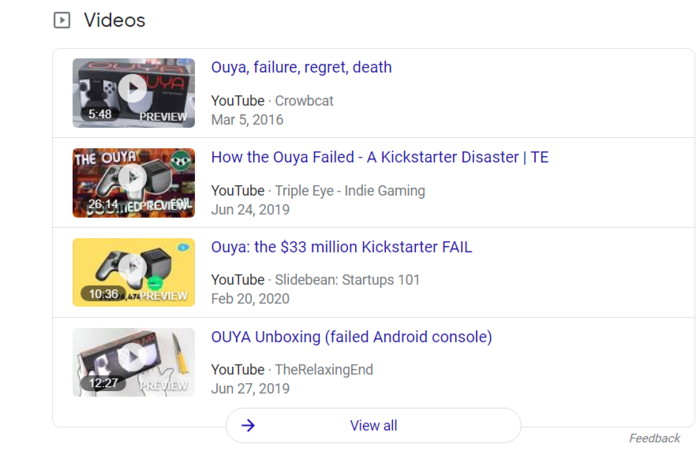
The second, and more common, reason is that they just don't know how to start. It feels more like a performance than an investment round.
The reality is that getting started is actually pretty easy. Start with a financial goal. One common concept that is implemented in crowdfunding platforms is the concept of a stretch target. The more money you raise, the more you can deliver when you start.
Of course, you don't just get free money. Your new investor army expects something of value in return for their money. But with a bit of creativity and a good understanding of what you can afford to provide financially, you should be able to do this job.
Once you have your goal and goals set, start building the marketing materials. Make a video about who you are and why they should invest in your business.
Crowdfunding is a highly competitive area. So don't expect this to be easy. However, if you are ready to work for it, crowdfunding might be the right approach for your business.
Apply for small business grants
For some reason, small business grants are not considered by most of the startup founders I speak to. I just thought they'd never heard of the concept, but now I'm starting to think it's because they don't think they'd qualify.
For example, the US government offers low-interest loans and even grants for small business executives. In economic terms, the government that supports entrepreneurs makes financial sense. After all, international competition is much easier when your economy is boosted by five or six very successful companies.
what does that mean to you? Indeed, if you are starting a new tech or science business, you stand a great chance of getting some of that free government money. You will also typically qualify for state and federal grants.
Conclusion
Having tight money as an entrepreneur is nothing new. It goes without saying that the option of start-up funding should be considered. It is important for you to keep in mind that finding the right financing can affect or affect your business.
Take the time to carefully consider your options. If you can afford to bootstrap, do so for as long as possible. Protect yourself and your business so it can develop properly over time.
What kind of financing do you find most interesting? Let me know in the comments below!