
How to decide on the correct ecommerce company
As an industry, e-commerce growth of at least 6.3 percent per year is expected. According to Statista, user penetration will be 82.2 percent by 2024, up from 77.3 percent in 2020. The retail apocalypse and a global pandemic have spurred e-commerce growth.
This is good news for ecommerce businesses. This is great news for an ecommerce company with an agency ready to capitalize on this growth.
Here's what you need to know to choose the right ecommerce agency.
Know your goals and desired results
With e-commerce, the goals and desired results are pretty simple. You have to sell products to make money. Your agency's approach should be directed towards direct response marketing. You send customers a relevant message designed to get them to do something – learn, subscribe, follow, or buy.
Here are some simple goals that you can use as a starting point for your agency.
- Increase qualified website traffic
- Increase the time on site
- Add more subscribers to your email list
- Add followers to your social media accounts
- Increase sales
- Increase upsells
- Increase the average order values
- Reduce costs and marketing costs
- Improve customer loyalty
These goals should be geared towards specific outcomes, regardless of the goals you choose. Examples of results are:
- 13 percent increase in return on advertising spend
- Website traffic increased by 26 percent
- Increase in sales by 30 percent compared to the previous year
- 2x product upsells
- Add 125,000 more subscribers in 18 months
Each of these examples should focus on achieving a specific outcome for your business. If you share specific goals with your agency, they should be able to provide you with a plan for achieving those goals.
4 characteristics that make a great ecommerce agency
Choosing the right ecommerce agency, while not rocket science, does require the right information and a little discipline. Knowing what you're looking for makes it easier to look for.
1. Experience and knowledge of your company
Your industry has its own ethnography – its own culture, its own jargon, and its own problems. Your agency should have the industry experience you need to successfully work with your clients, your company, and the industry.
If your product lines are broad, or you have many products, you may be able to partner with agencies with broad or general skills. If you are a specialist or your industry is highly technical, it is really important that you choose an agency with subject matter experts who understand your business well.
If your agency has this know-how, it will have the know-how to effectively promote your business. They know which images work best. Your writers will understand the tone and voice they should be using in your content. You have a pretty good idea of what promotions your customers will be responding to.
2. You put customers first
Your agency should treat your clients as a priority. They mean, of course, that they are working to get to know your customers as well as you do. This isn't just an understanding of the things your customers want and need. It's an understanding of how you work with your customers.
This is important because your agency needs to be able to say no if it sees something that could negatively affect clients.
This is important because you can be confident that your agency will always do the best for your clients and your company. It also means your agency is focused on managing your budget well so that it can generate results for you.
For example, if your agency knows your breakeven costs and understands your margins, it will avoid creating ads with offers that cause financial loss. If your margins are tight, avoid customer discounts and focus on backend incentives (e.g. low price guarantees, bonuses, and guarantees) to attract more customers.
3. You prioritize sales and returns
Everything your agency does should generate income. Your work should consistently generate leads, sales, and revenue for your business. Your agency should help you cut costs, especially in high-cost areas like shipping and returns.
They should be able to show you a process that they can follow to increase your return on investment and reduce advertising costs. That sounds like pretty obvious advice, but you'd be surprised how many agencies ignore this. Some agencies prefer vague revenue and income statements so it is easy to collect their monthly fees.
4. Focus on the right metrics and KPIs
There are many ecommerce metrics you can keep track of. Your agency should be able to identify the key metrics you need to grow your ecommerce business. If you decide you need more data, you can always add more metrics as needed.
Key metrics your agency needs to focus on:
- Website Traffic Rates: You want to identify the sources of traffic that are making you money, sources that are costing you, and the sources that are driving higher conversion rates over time. If qualified customers are interested in the traffic you're getting, your source is a good one. If your agency continues to use CRO procedures, you should be able to grow your traffic over time at a lower cost.
- Email opt-ins: Email marketing is still one of the most valuable marketing channels you can use. A ROI of $ 42 is achieved for every US dollar spent. When you create an email list, you're converting paid or earned media to your own media. Your agency should focus on building emails as a marketing channel and thereby stabilizing your cash flow and sales.
- Sales conversion rates: The average e-commerce conversion rate in the US is 2 to 4.9 percent. With consistent testing, your agency should be able to increase your conversion rates year over year. Your agency should also track micro and macro conversion rates.
- Average order values: This keeps track of the dollar amount your customers spend on each order on your website. Your agency should be able to provide you with specific steps that can help you increase your average order values (and customer longevity values) over time. They are designed to help you create upsell, downselling, and cross-selling opportunities. You should always have a list of tactics that can help you increase your average order values.
- Return rates: Returns cost ecommerce businesses more than $ 550 billion. While the average response rates for stationary companies are between 8 and 10 percent, the e-commerce response rates are more than twice as high at 20 percent or more. Your agency should be able to help you lower your response rates. This is difficult because 41 percent of customers buy products in order to return some or all of their items.
- Churn rate in e-commerce: Churn measures customer attrition; This is a problem for e-commerce. How do you measure churn rates if your customer never cancels? Your agency should be able to use metrics like repeat purchase rate or time between orders to calculate your churn rate and provide you with a plan to reduce churn in the future.
The ecommerce agency you choose should be able to provide you with clear answers to these questions. It should be clear that they have these characteristics and the ability to produce the results you want.
How to work with an ecommerce agency
Your ecommerce agency should provide you with the information you need to evaluate their features. You want to request this information in advance.
- A proven track record: Your agency should be able to provide you with samples, references, case studies, and reviews to document their performance. If you found your agency through SEO, this is a good indication that they understand SEO and are able to produce results for your business.
- Clear expertise: Your agency should be able to provide you with samples, case studies, and a proven track record showing that they have the knowledge and experience necessary to sell your products well.
- Clear milestones for progress: You should be given a clear schedule that shows you how you are approaching your campaign, how long it will take to get everything done, and when they expect you to see initial results.
- A list of their credentials: Ask your agency for a list of certifications or credentials providing expertise, if any. This will test their experience and knowledge in several areas. For example, if they're a Premier Google Affiliate, you know they have a certain number of customers, revenue, and some financial stability.
- Agency staff and procedures: Your agency needs to show you how to approach your campaign or project. Ask them to outline their process, show how they manage your budgets, and how they manage their people. You should know who is assigned to your account and what their background is.
- Communication guidelines: When and how will your team communicate with you. Who is your contact person? Can you call your contact anytime you need help or is there a specific time available? Is support included (should be).
Your agency should give you details on each of these points. If you have any further questions or concerns, please contact your agency.
The 6 Best Ecommerce Agencies
Here is a list of the best ecommerce agencies in the business.
1. NP Digital – Best for maximizing ROI
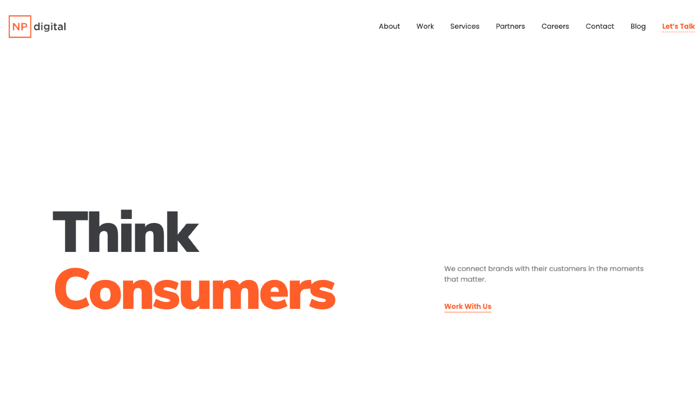
NP Digital is my e-commerce marketing company. One thing that sets my agency apart from other agencies is our direct response focus. Any improvement we make must generate revenue in some way. Whenever we optimize images, rewrite copies, or redesign graphics, we need to make money for customers or get results in meaningful ways.
2. Growth – best for strategic planning
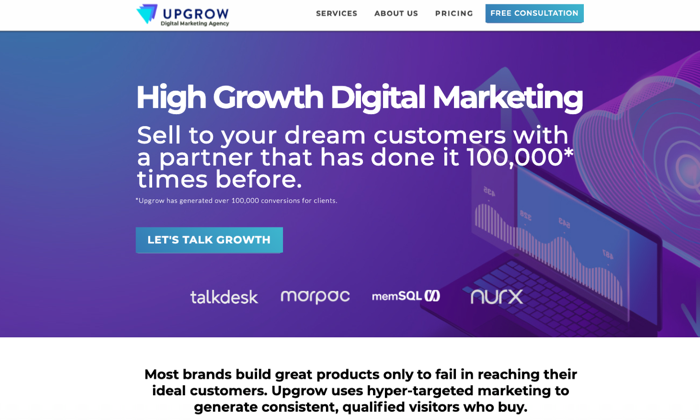
Upgrow is an e-commerce marketing agency that offers full A to Z coverage and optimization. You can design, build, optimize, and promote your ecommerce business. As an agency, they are experienced generalists. They work easily with ecommerce customers regardless of their industry, whether they're selling $ 1 worth of pencils or five-digit advice.
3. Inflow – Best for ecommerce specialists
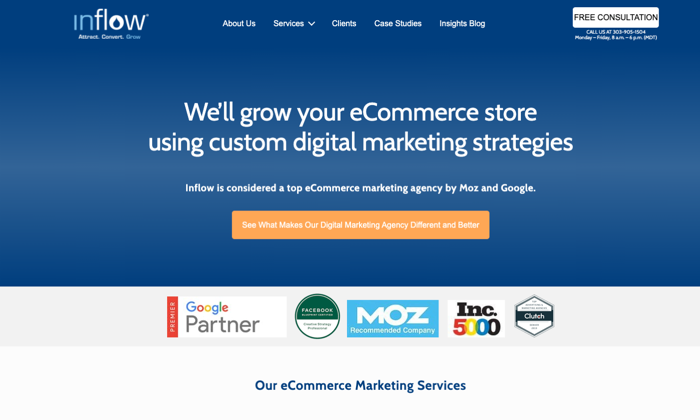
Most agencies offer A to Z support in different areas – design, optimization, and advertising. The inflow goes in the opposite direction and focuses exclusively on the marketing and advertising side. They offer SEO, PPC, Paid Social and CRO services.
A special feature of Inflow is the fact that they don't have an account manager. Customers work directly with industry veterans. If you have any questions or concerns about your campaign, you can discuss the details directly with your account staff.
4. Single Grain – Best for a custom marketing plan
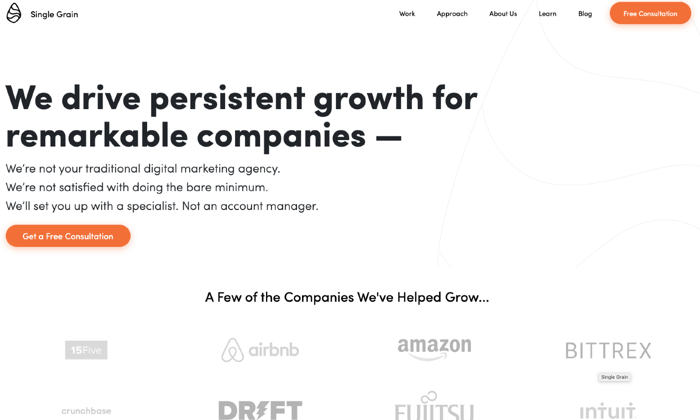
Single grain focuses on rapid growth; Every customer receives a unique digital marketing campaign. Single Grain creates custom strategies on a case-by-case basis. This is important as many ecommerce marketing companies use cookie cutter techniques for ecommerce marketing.
5.1Digital – Best for Bigcommerce Customization
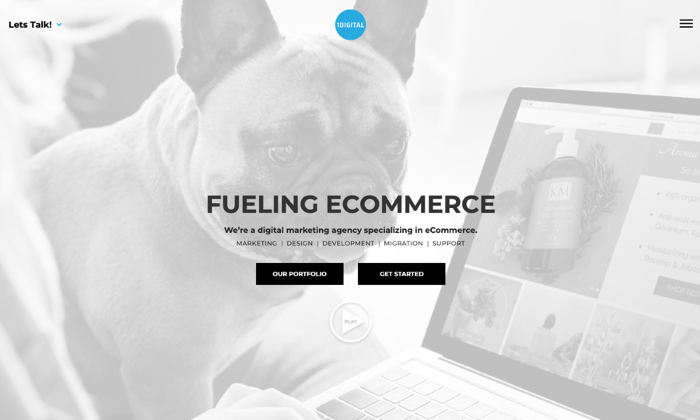
1Digital works with several ecommerce platforms including Shopify, Magento, Volusion, and Woo Commerce. They are known for their work with BigCommerce and Shopify. Like other agencies, 1Digital is a full-service agency that offers services from A to Z.
6. Avex – Best for Shopify Plus

Avex is a creative boutique e-commerce agency focused on brands in the beauty, luxury, lifestyle and fashion sectors. They mainly focus on optimizing for the Shopify platform. They prioritize the creative and design side of marketing, which makes sense based on the industries in which they operate.
Conclusion
The e-commerce industry will continue to grow as more and more people move their offline dollars online. This is a great opportunity for ecommerce merchants. This will also be a challenge for the companies that are not prepared for the following competition.
Choose the right agency and you will get the support you need to stay one step ahead of your competitors. Use this guide to find the pros and cons that you need to check out the right ecommerce agency.