
Life via a special lens
In the United States, Verizon, HP, and General Mills made waves in 2016 when they insisted on only working with creative agencies that have a diverse workforce.
Clients and agencies are beginning to question the lack of diversity in their creative work. The tide turns. But it still proves difficult to find diverse talent when the creative industry has been largely dominated by older white men for so long.
Studio PI, a new photo and illustration agency, hopes to change that.
Their mission is simple: to promote equality and celebrate diversity in photography and illustration, with a special focus on women, people of color, people with disabilities and working class people.
"Diversity makes content better," says Sachini Imbuldeniya, founder and CEO of Studio PI. "We want to create content that truly reflects the society we live in. From a business perspective, there is also evidence that diversity helps businesses grow."
The founder and CEO of Studio PI, Sachini Imbuldeniya

The Statistics Don't Lie – 2019 McKinsey & Co research found that companies with 25% gender, race and ethnicity are more likely to achieve financial returns above their national industry median values.
Imbuldeniya is also the Creative Director of Bridge Studio, News UK's multi-award winning content agency. She believes Studio PI will benefit from growing under the influence of a large media company as it unlocks job opportunities from the stable of in-house publishing and gives talent access to studio facilities and equipment to improve their skills. It is the first agency of its kind to be launched by a major media publisher.
With years of experience as an art director and creative director in various publications and agencies, Imbuldeniya knows that it can be tempting to resort to the standard option when commissioners are under pressure. "The deadlines are tight, so you end up hiring the same people you know and trust because it's easier," she shrugs. "You don't always have the time and space to think outside the box and try out people who could bring a new perspective to the content you create."
We want to create content that actually reflects the society we live in. From a business perspective, it is also proven that diversity helps businesses grow
Studio PI solves this problem and offers the commissioners fresh, innovative and, above all, diverse work in one place. "I wanted to find artists whose work I had never seen before," explains Imbuldeniya.
In order to curate the right selection for founding the agency, Imbuldeniya spent months “searching every creative space known to man for unusual but unrecognized work” and also published open notices on social media. "We have been inundated with portfolios," she says.
After scheduling hundreds of video calls to get to know applicants better, Studio PI put together a varied list of around 250 talented artists with underrepresented backgrounds.
Next, an outstanding jury of 50 commissioning art directors, creative directors and photo editors helped curate the final talent list through a blind evaluation process: all names and biographies were removed to avoid unconscious prejudice so that candidates could be judged solely on the quality of their work .
BUILD A RICH AND VARIED ROSTER
The result of this rigorous process is that Studio PI now represents nine photographers and ten illustrators. This is the maximum number that Imbuldeniya could do justice to with the agency's current team, although they would like to expand in the future.
One of those who did the edit is Brunel Johnson, a documentary photographer from north west London. He also works in commercial sports and lifestyle with clients such as adidas and Timberland.
It's time to mix things up and it's exciting that there are real people in the industry who are effectively making change
Johnson documented the recent BLM protests by bringing his own experience as a black man in central London to the subject and, as Imbuldeniya puts it, "hope and solidarity, not just legitimate anger about the situation".
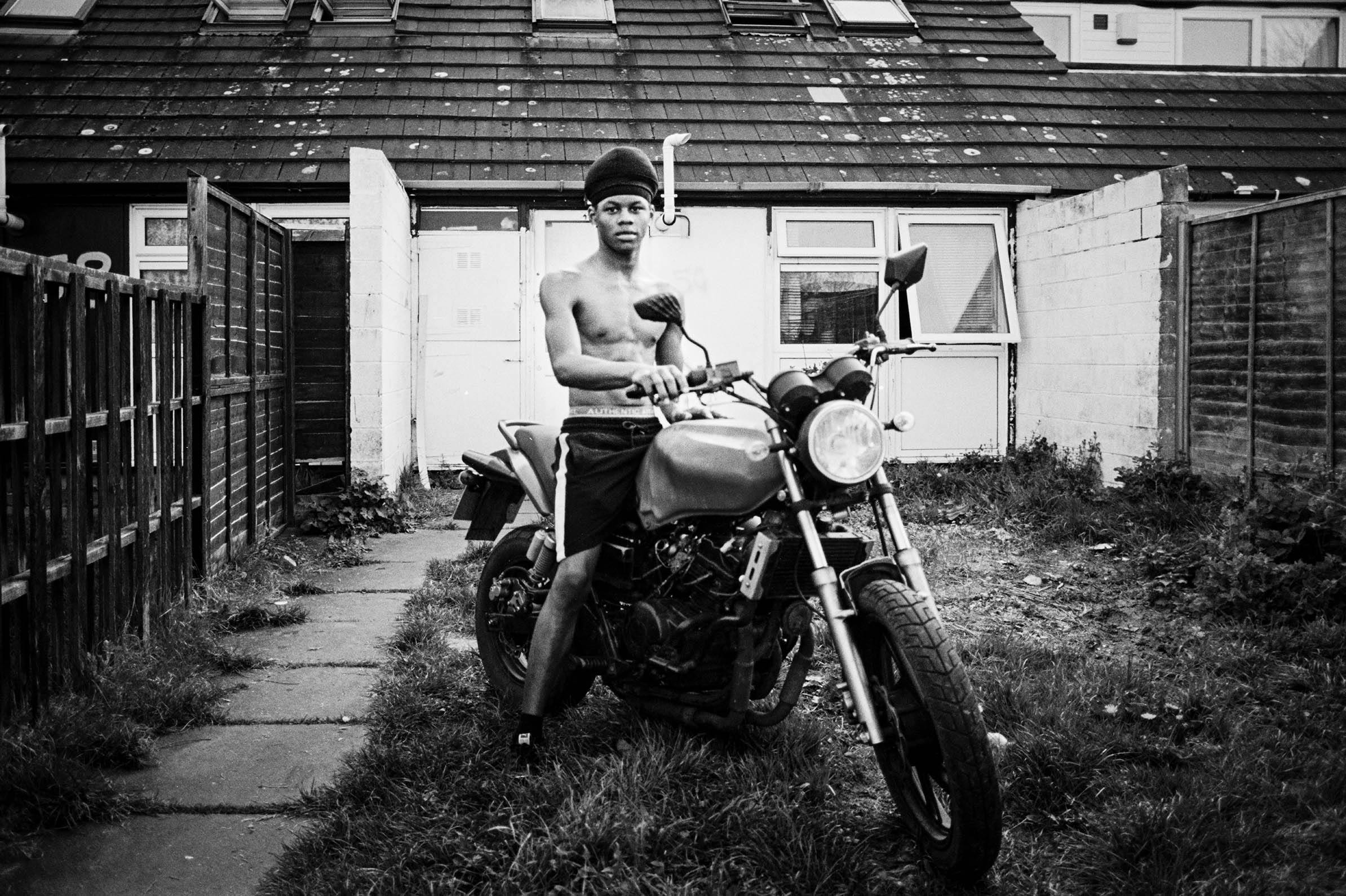

"If you look at the news cycle back then, so many reports portray the BLM protests in a negative light, calling it 'riot' with an emphasis on property damage or violent clashes," she added. "That's not the story behind the Black Lives Matter movement, and it's important to see the difference between those perspectives."
Johnson also has an ongoing personal project called "It's My Hair," which focuses on the skills and efforts required to care for Afro hair and the prejudices Afro-Caribbean people experience.
"In an environment characterized by nepotism and elite networking, initiatives like Studio PI make the impossible possible," he says. "It's time things got mixed up and it's exciting that there are real people in the industry who are effective in making change."
Another talented photographer from Studio PI is Chantel King, whose focus is on beauty and fashion. Coming from a single working class family, King did not go to college straight out of school, but later graduated in art foundation and graphic design.
Her portfolio includes beauty shoots for stylist, dreamingless, beautiful! and flawless and fashion work for titles like HUF, Pride and Institute. A recent project for Revolution Beauty consisted of an all-black, all-female crew and was shot in a black-owned studio to authentically support the Black Beauty community.
“Promoting equality and celebrating diversity should be a normal work practice, but unfortunately it isn't,” says King. "In my decade of experience, I've seen a lack of representation of people who look like me, both in front of and behind the camera."
Diversity should not be a buzzword: it is the reality of life and should be promoted to every degree and in every space
“Black creatives have felt ignored and aloof for so long,” she continues. “We live in a mixed culture society, but there is a clear lack of diversity within the creative industry. Representation is important at all levels. "
A third example is Kofi Paintsil, a multidisciplinary photographer whose clients include the BBC, Channel 4, Chanel, Nike and Kensington Palace. He has exhibited in London, Paris, Ghana and Art Basel Miami.
Paintsil has developed a visual language that encompasses his many disciplines and focuses on space, shape, and light, whether he's working in fashion or portraiture, capturing the movement of the dance, or exploring the naked form.
"Not only is it necessary and relevant that a new agency like Studio PI exists, but it is long overdue," he believes. "Diversity should not be a buzzword: it is the reality of life and should be promoted to every degree and in every space."
DRAWING ABOUT THE WISDOM OF EXPERIENCE
Imbuldeniya's personal journey into the creative industry, which itself represents all four underrepresented criteria, has given her valuable experience of the hurdles faced by talented individuals from diverse backgrounds.
She recalls how her working-class Sri Lankan background initially distracted her from the arts; Her science-minded family never saw this as a viable career path. "Guaranteed income was the main thing," she explains.
Imbuldeniya enrolled to study biology, but it was clear that the path was not for her. She dropped out after a week and asked for a basic art class to include her, even though she didn't have a portfolio to talk about. "You took a massive risk for me," she admits. "I had to work twice as hard to catch up."
I've had so many meetings where I was the only woman or the only black person. It's intimidating. You are expected to fit.
It was worth the effort, however, and Imbuldeniya studied graphic design at Middlesex University as part of an impressively diverse 80-person course. Only a handful got jobs in the industry, however, and many continued their education as they didn't know the right people to get their feet in the door.
Imbuldeniya admits she was fortunate enough to land a junior position with the Sunday Times Magazine shortly after graduating. The lead designer was a Middlesex alumnus and emailed the tutor asking for recommendations.
“I was the only black person who worked on the magazine at the time,” she recalls. "At some point I was told we couldn't put a black person on the cover because Central England might think so. I was surrounded by people who didn't look, think or speak like me."
Imbuldeniya has been discriminated against both because of her gender and because of her race throughout her career. "I've had so many meetings where I was the only woman or the only black person," she explains. "It's intimidating; you're expected to fit in rather than bring in a different perspective."
In the long term, I hope that Studio PI is not needed. But now we are here to commission our diverse roster
As a junior, Imbuldeniya did not lift her head over the parapet to shout what she was seeing for fear of losing her job. Now that she has climbed through the ranks, she wants to make sure that no young creatives have to have the same experiences. She found her voice – and people are listening.
"In the long term, I hope that Studio PI won't be needed," she says. After all, the ultimate goal is for all of these agencies to be equally committed to diversity. "But now we are here to commission our diverse roster, improve their profile and promote their work."
studiopi.co.uk